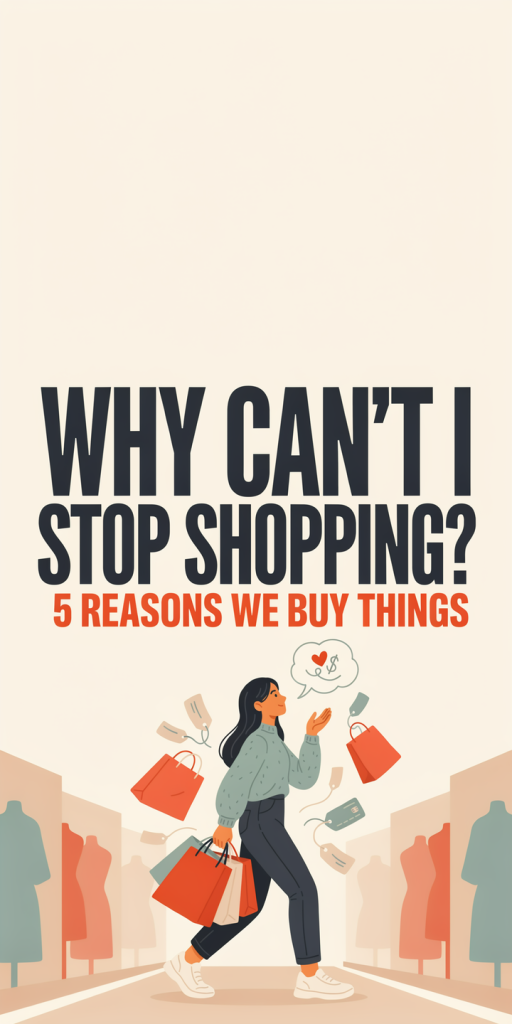
You can’t be the only mom wondering why the cart keeps filling up even when the closet is already full. Shopping can feel like a quick mood boost, a way to belong, or just the easiest way to solve a problem in the moment. Understanding the real reasons behind the impulse makes it easier to change habits — and even turn that energy into something productive that supports your family and goals.
Reason 1 — Emotional Spending: You Shop to Feel Better
Description
Sometimes a purchase is really an emotional short cut: stress relief after a tough day, a celebratory treat, or a way to soothe boredom. The temporary lift can feel worth it — until the next bill arrives.
Practical setup steps
– Track triggers for two weeks: note time, mood, and what you bought. Pattern recognition is everything.
– Replace the habit loop: create a short checklist to run before buying (pause 24 hours, compare alternatives, ask “Do I already have this?”).
– Channel the emotional impulse into something that builds value: create content about mindful spending and share your journey by starting a blog.
– Pick a niche (e.g., frugal family living).
– Choose a theme and write 3 helpful posts that answer common questions.
– Promote posts on Pinterest and schedule pins with a social media scheduling tool.
– Monetize gradually: add affiliate links, share product reviews, or create a digital guide.
Estimated startup costs
– Domain and web hosting: $20–$100 for the first year.
– Optional paid Pinterest scheduling / pin tools: $0–$30/month.
– Total initial investment: roughly $20–$150.
Ready to turn spare time into income while you break the shopping habit?
Reason 2 — Social Influence and FOMO: You Buy to Fit In
Description
Seeing peers, influencers, or friends with new things creates pressure to match lifestyles — even when those purchases don’t fit your budget or values.
Practical setup steps
– Audit your feeds for triggers: unfollow accounts that push constant consumption.
– Create a capsule shopping list of truly useful pieces for your life; buy only from that list.
– If you like curating items, turn that talent into a side hustle — start a small online boutique or curated resale shop:
– Decide product focus (kids’ gear, mom self-care, seasonal decor).
– Set up a storefront on a marketplace or simple website (use web hosting and a basic shop plugin).
– Build an opt-in and funnel: create a welcome freebie and collect emails, then drive traffic via Pinterest and scheduled posts using a social media scheduling tool.
– Use lean marketing at first — focus on one platform and build a small, engaged audience.
– Build a simple sales funnel to guide visitors from curiosity to purchase with an automated welcome and checkout.
Estimated startup costs
– Inventory-minimal approach (dropship or curated preorders): $0–$200.
– Basic website + web hosting: $20–$100/year.
– Funnel / email tool: $0–$50/month.
– Total initial investment: roughly $0–$350.
Reason 3 — Habit and Convenience: You Buy Because It’s Easy
Description
Online shopping is engineered to be frictionless: one-click checkout, saved cards, and targeted recommendations make buying the default. Habits form when convenience removes the friction of decision-making.
Practical setup steps
– Reintroduce friction: remove stored payment methods from shopping apps and log out of marketplaces.
– Set a “three-click rule”: if a purchase requires more than three steps to justify, delay it.
– Redirect convenience into income: offer services from home through platforms like Upwork or Fiverr — freelancing can be done in short sprints between childcare tasks.
– Identify 2–3 marketable micro-skills (Pinterest pin design, email formatting, product descriptions).
– Create profiles with clear service descriptions and samples.
– Pitch 5 small jobs per week and deliver excellent results to get repeat work.
– Use savings from reduced impulse buys to build a small emergency fund.
Estimated startup costs
– Tools (graphic templates, basic subscriptions): $0–$50.
– Optional course or templates: $0–$100.
– Total initial investment: roughly $0–$150.
Reason 4 — Rewards, Deals, and the Thrill of a Bargain
Description
The dopamine hit from snagging a deal or earning points can feel like a win, so you seek bargains even for items you don’t need.
Practical setup steps
– Redirect the thrill: take a fraction of “savings” and stash it into a goals jar or a small investment instead of buying something.
– If you want quick, low-effort ways to earn, consider completing paid surveys in spare minutes:
– Sign up for reputable panels.
– Set up a schedule (e.g., 20 minutes after nap time) to be consistent.
– Track time vs. payout to avoid low-value tasks.
– Combine deal-hunting with a small project: bundle thrifted finds and resell locally, or document bargain makeovers on a mini side hustle blog or social feed.
Estimated startup costs
– Surveys: $0.
– Resale start (cleaning supplies, labels): $10–$100.
– Total initial investment: roughly $0–$100.
Reason 5 — Identity and Aspiration: You Buy to Reinvent Yourself
Description
We often purchase items that reflect who we want to be — the “fit mom,” the entrepreneur, the organized household manager. These purchases support an aspirational identity.
Practical setup steps
– Define the identity you want with specifics: what daily habits does that look like? What outfits or tools truly support those habits?
– Invest in creating that identity through scalable, income-producing work: build digital products or courses and promote them with a sales funnel.
– Validate your idea with a free mini-workshop or email signups.
– Create a lead magnet and landing page (host on a simple site with web hosting).
– Drive traffic with content and Pinterest pins, and automate outreach with social media scheduling.
– Use early sales to reinvest in assets that support your identity (better tools, courses, or childcare to free up time).
Estimated startup costs
– Basic course or ebook creation (software, templates): $50–$300.
– Landing page & web hosting: $20–$100.
– Funnel and email tools: $0–$50/month.
– Total initial investment: roughly $70–$450.
You don’t have to stop shopping overnight — understanding why you buy gives you options. Use simple habit changes, redirect impulses into small income streams like a side hustle or freelancing on Upwork / Fiverr, or start sharing your journey by starting a blog. Small structure and honest reflection can turn repetitive spending into purposeful action that supports your family and your goals.