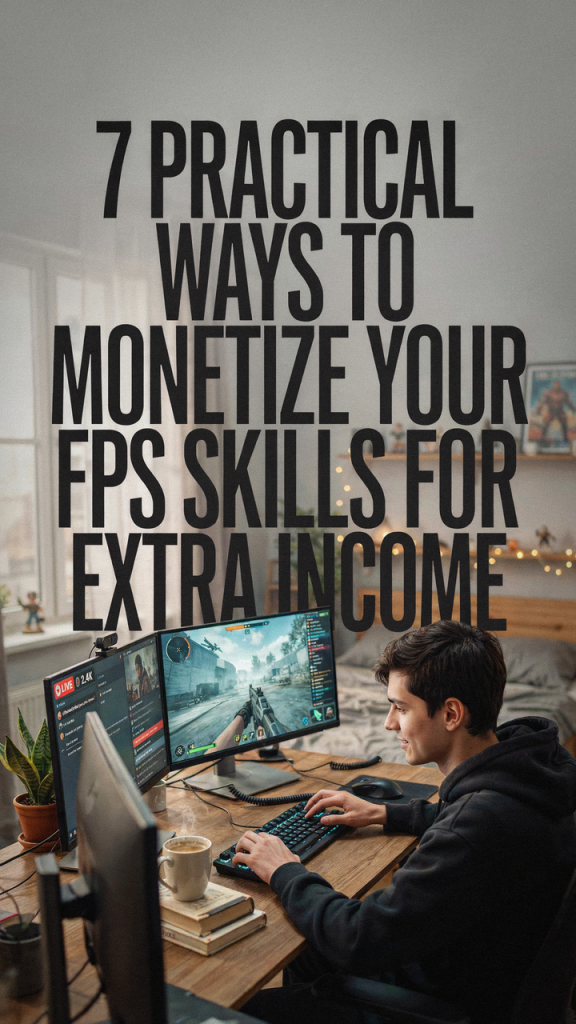
If you can consistently hit headshots, read a mini-map under pressure, and keep a calm voice while coordinating teammates, you already have marketable skills. The multiplayer FPS ecosystem—viewers who want live entertainment, players who want coaching, organizers who need testers, and brands that want authentic reach—creates multiple, complementary ways to turn gameplay into income. This article delivers an ethics-first, practical roadmap you can follow: how to pick the best revenue combos for your strengths, the tech and setup you’ll need, realistic timelines and early goals, legal and platform risks to avoid, and a 90-day action plan to get started.
Key Takeaways
Why your FPS skills are monetizable now
– Live video demand: Audiences still gravitate to live play where personality, banter, and clutch moments create engagement that clips and highlights can’t fully replicate.
– Low-friction content reuse: A single stream can produce dozens of clipable moments, tutorial segments, and short-form videos that fit different platforms.
– Growing market for coaching: Many players want skill improvements but lack time or knowledge to self-teach; they’ll pay for guided, efficient feedback.
– Competitive and semi-pro circuits: Tournaments, open qualifiers, and sponsored ladders offer prize money and visibility that can be parlayed into sponsorships or coaching demand.
– Product and community monetization: Gear recommendations, digital guides, private leagues, and paid Discord tiers let you monetize attention beyond ad revenue.
This article covers how to build multiple complementary income streams—content, competition, coaching, community services, and playtesting—so they feed and scale each other rather than depending on one fragile source.
Ready to turn an idea into practical income?
How to think about monetization: diversification, tradeoffs, and audience-first decisions
Monetization is a portfolio play. Each revenue method has a different blend of time cost, scale potential, and upfront friction:
– High time, high margin: 1:1 coaching and personalized VOD reviews—great per-hour income but limited by your available time.
– High friction, scalable: Creating an evergreen course or paid guide takes work up front but can sell repeatedly.
– Low time, low margin: Short-form clips repurposed across platforms—small direct revenue but powerful for funneling viewers to paid offers.
– High variance, high upside: Tournament play and sponsorships—rare wins can change everything but are not guaranteed.
Audience-first: monetize where your audience is and what they want. If you enjoy banter and audience interaction, streaming and community tiers are natural. If you’re more analytical and good at explaining nuance, coaching and tutorial videos will fit better. The fastest path to income is aligning your strongest skill (play, analysis, teaching, or production) with one revenue method and two supporting channels that amplify it.
Primary income categories at a glance
– Content & creator platforms: live streams, long-form video, short-form clips, memberships.
– Competition & events: tournaments, qualifiers, sponsored events, team play.
– Services & coaching: 1:1 lessons, VOD reviews, group clinics, paid scrims.
– Testing & QA: playtesting, bug reporting, focus groups, paid panels.
– Product & affiliate sales: gear reviews, affiliate links, digital products, paid leagues/Discords.
Quick overview of viable income methods (one-sentence summaries)
– Livestreaming: Play live on platforms where viewers subscribe or donate for immediate interaction.
– On-demand long-form video: Publish tutorials, guides, and match analysis that attracts search-based viewers.
– Short-form clips: Edit highlight reels and tips to build awareness on social platforms.
– Tournament play & esports: Compete for prize money and exposure; use results to attract sponsors or coaching clients.
– Private coaching: Offer structured lessons and feedback to players seeking focused improvement.
– Paid scrims/ladders: Host or join monetized practice leagues for semi-pro teams and serious players.
– Playtesting and QA: Get paid to find bugs and provide feedback to devs and QA contractors.
– Sponsored content & brand work: Partner with brands for paid promotions once you have an engaged audience.
– Affiliate links & gear reviews: Recommend peripherals and earn a commission on sales.
– Digital products: Sell guides, e-books, templates, or courses that package your expertise.
– Community monetization: Offer paid Discord tiers, private leagues, or subscription access to training materials.
Choosing the right paths for your profile: pick 1–3 complementary methods
You don’t need to do everything. Pick 1 primary income method and 1–2 supporting streams that amplify it. Use this mini decision tree to choose:
- Do you enjoy interacting in real time? If yes → Streaming + short-form clips for discoverability + paid Discord/community tiers.
- Are you a patient teacher who enjoys analysis? If yes → Coaching + long-form tutorials + digital guides.
- Are you the best player on your friends list and enjoy competition? If yes → Tournaments + content about competitive play + coaching for aspiring competitors.
- Do you like writing or building evergreen lessons? If yes → Digital products + video tutorials + occasional paid workshops.
Time availability matters: if you can do 20+ weekly hours, consider streaming plus coaching. If you have 5–10 hours, focus on one high-leverage product (a course or paid service) and use short clips to market it.
Deep dive — Streaming (Twitch, YouTube Live, Trovo, etc.)
Why streaming? Real-time engagement builds trust and converts viewers to paid supporters. It also feeds content for other channels.
Setup checklist
– Hardware: Stable PC or console. For PC, a streaming-capable system or a capture card for console capture.
– Internet: Wired connection; aim for consistent upload speed suitable for your target resolution.
– Audio: A clear microphone (dynamic mics tend to reduce background noise). Pop filter and mic arm help.
– Video: Optional webcam; good lighting is more important than camera quality.
– Software: OBS/Streamlabs or other broadcast software; overlays, alerts, and a chat bot.
– Scene organization: Scenes for gameplay, BRB, and intermission; named folders for assets and music (remember copyright rules).
Growth tactics
– Schedule and consistency: Pick 3–5 weekly sessions and stick to them to build habitual viewership.
– Chat engagement: Use rules, prompts, and commands to make first-time viewers feel included. Short on-screen objectives (like “3 wins for a giveaway”) encourage participation.
– Cross-promotion: Clip standout moments and publish them as short-form videos; post schedule and highlights on other platforms.
– Collaborations: Play with streamers at a similar size to exchange audiences.
– CTA funnel: Use pinned links for donations, coaching signups, or community join links. Make it easy to support you.
Monetization mechanisms (what actually pays)
– Platform native options: subscriptions, platform-level tipping/donations, ad revenue (availability varies by platform). Check each platform’s current requirements to access features.
– Direct support: Donations via third-party services, Patreon, or subscription sites.
– Sponsored streams: Brand integrations or gear showcases—usually available once you have sustained viewership.
– Affiliate links: Run them in panels or descriptions and reference them when discussing gear.
Realistic early goals
– Months 0–3: Focus on consistency, community, and clipable highlights. The initial goal is regular viewers tuned into your schedule—not large revenue.
– Months 3–9: Convert regular viewers into a small base of paying supporters or coaching clients. Expect slow growth unless you land a viral clip or strong collaboration.
– Long-term: Combine steady subscriptions with sponsorship and product sales to reach sustainable income.
Deep dive — Video content (YouTube longform and short-form platforms)
Why longform? Searchable tutorials and breakdowns accumulate views over time. Shorts and other short-form content drive discovery and can spike growth.
Content types that work for FPS audiences
– Tutorials and micro-skills: Aim for practical, actionable tips (e.g., crosshair placement in specific maps).
– Patch breakdowns and meta analysis: Keep people informed how balance changes affect play.
– Montages and highlights: Edited clips of high-skill plays that are shareable.
– VOD reviews and case studies: Walkthroughs of mistakes and better choices—helps coach prospects find you.
– Reaction/analysis: Watch pro matches or pro gameplay and break down decision-making.
SEO, titles, and thumbnails basics
– Titles: Use clear, searchable phrases and a benefit (e.g., “How to Win Set Plays on Map X — 3 Consistent Tricks”).
– Thumbnails: High-contrast, readable text, and a clear focal point—avoid clutter.
– Description & tags: Include timestamps, related links (coaching, socials), and short summaries.
– Repurposing: Clip long videos into 30–60 second highlights for short-form platforms to drive viewers to your longform library.
Monetization
– Ads: YouTube ad revenue requires channel eligibility; it’s steady but often small unless views scale.
– Short-form monetization programs: Platforms sometimes have creator funds or monetization for short videos; rules change, so check eligibility.
– Channel memberships and exclusive content: Offer members-only videos or early access.
– Use longform to funnel to coaching, paid guides, or community subscriptions.
Deep dive — Esports and tournament play
A laddered approach (local to pro)
– Start small: Local and community-hosted online tournaments are good practice and a place to network.
– Open qualifiers: Many larger events have open qualifiers that anyone can enter—use them to get exposure.
– Semi-pro circuits: Regional leagues and sponsored ladders offer more prize money and scouting opportunities.
– Pro orgs: If your results stand out, organizations may recruit or offer trial periods.
How to find events
– Join community Discords and tournament platforms; follow game-specific competitive news channels.
– Network with players and organizers—visibility often comes through community involvement.
– Attend local LANs when possible; face-to-face networking still opens doors.
Building a team and approaching orgs
– Team-building: Start with reliable players who share practice schedules and goals. Create clear roles and expectations.
– Approaching orgs: Compile match results, highlight reels, and a concise one-sheet explaining your team’s strengths. Expect many rejections; persistence is normal.
– Leverage results: Use tournament footage to promote coaching services or content that analyzes your team’s strategies.
What to expect in prize pools and leverage
– Early-stage tournaments usually have modest payouts but high opportunity for exposure. Use early wins to build credibility and client pipelines for coaching.
– Tournament visibility can trigger sponsorship interest, but brands look for consistent audience engagement and alignment with their product.
Deep dive — Coaching, guides, and paid services
Productizing your skill
– Offer clear products: 1:1 coaching, a set of VOD review packages, group workshops, and downloadable guides. Create standard packages to simplify purchasing and delivery.
– Structure sessions: Have a repeatable coaching framework—pre-session questionnaire, live review and drills, homework, and follow-up notes.
– Scale: Move from 1:1 to group clinics and pre-recorded courses as demand grows.
Pricing strategies
– Start low to attract initial clients and gather testimonials, then raise prices incrementally.
– Charge by session length (30/60/90 minutes) or sell bundles (3-session pack with a discount).
– Consider offering a single discounted trial review to convert students into longer-term clients.
Platforms to host sessions
– Video calls: Zoom or Google Meet for lessons; use recording so students can review sessions.
– Coaching marketplaces: These can provide client traffic but often take a cut. Compare fees against the value of exposure.
– Scheduling and payment: Use a simple booking tool and accept payment via common methods (cards, PayPal, or platform-based payments).
How to market services
– Use short clips that demonstrate coaching value—before/after sequences, client testimonials, and concise tips.
– Offer a free low-effort product (a short checklist or mini-guide) to collect emails and funnel to paid coaching.
– Encourage referrals with discounts or credits.
Deep dive — Playtesting, QA, and freelance work for game companies
Roles that pay players to test
– Playtesters: Evaluate features, balance, and gameplay loops.
– QA testers: Reproduce bugs, submit clear reports, and verify fixes.
– Focus group participants: Provide feedback on player experience and monetization concepts.
How to find legitimate listings
– Search job pages of studios and reputable QA vendors; relevant game industry job boards often list contractor QA roles.
– Avoid listings that ask for upfront payments or require you to sign questionable agreements—legitimate testing work does not require fee-based “training” you must buy.
– Use professional channels (LinkedIn, company career pages) and check company reputation.
Portfolio and preparation tips
– Build a short portfolio: sample bug reports with clear reproduction steps and short video evidence.
– Learn to write concise bug reports (what happened, steps to reproduce, expected outcome, logs or video proof).
– Practice using basic bug-tracking tools and learn typical triage terms so you can communicate clearly with developers.
Paid focus groups and survey panels
– These are lower-paying but lower-friction ways to earn from providing feedback. Use them as a supplement if available in your region.
Legal considerations for playtesting
– Many testers must sign NDAs—respect them. Never share unreleased content or leaks; doing so can result in legal consequences and loss of future opportunities.
– If a contract looks confusing, consult a legal advisor before signing.
Risks, platform ToS, taxes, and account safety
Terms of service and platform rules
– Read the ToS before monetizing on any platform. Common issues include rules around sponsored content, affiliate disclosures, and not manipulating metrics (e.g., view or engagement inflation).
– Avoid third-party schemes promising fast followers or revenue; they often violate platform rules and can result in account bans.
Account security and reputation
– Use strong, unique passwords and two-factor authentication for all accounts. Consider a password manager.
– Keep financial accounts (payment processors, bank accounts) associated with consistent legal names to avoid verification problems.
– Be mindful of public behavior—what you do on and off-stream can affect sponsorships and partnerships.
Taxes and recordkeeping (U.S. basics)
– Treat gaming income as self-employment: keep records of income and expenses from day one.
– Save a portion of gross income for taxes; many creators set aside 20–30% as a rough reserve, but consult an accountant for tailored advice.
– Track deductible expenses: equipment, software subscriptions, home office use, and business travel where applicable. Keep receipts and records.
Ethics and transparent disclosures
– Clearly label sponsored content and affiliate relationships to maintain trust and comply with advertising rules.
– Don’t misrepresent abilities or results in coaching offers; be honest about the value and typical outcomes.
Equipment and simple tech checklist
Minimum to get started
– Reliable gaming device: mid-range PC or console that runs your target game smoothly.
– Microphone: a clear mic (USB dynamic or XLR with an interface) is high impact for viewer retention.
– Headset or monitors: comfortable audio for play and communication.
– Webcam and lighting: optional for streaming—better lighting dramatically improves webcam quality.
– Capture solution: capture card if streaming from console or using a second PC for encoding.
– Network: wired Ethernet connection; prioritize low latency and stable upload speeds.
Software and productivity tools
– Streaming software: OBS or similar.
– Video editor: simple editing software for clipping and short videos.
– File backups: cloud storage for important VODs and assets.
– Scheduling and invoicing: lightweight tools for booking clients and tracking payments.
90-day action plan: concrete weekly milestones
This plan assumes you can commit 8–15 hours/week. Adjust per your availability.
Week 1–2: Foundation and clarity
– Decide primary and 1–2 supporting income methods (e.g., streaming + coaching + short clips).
– Setup basic streaming/VOD tools: account creation, OBS scenes, basic overlays, and a clean audio setup.
– Create a simple one-page offering for coaching or services and set pricing tiers.
– Start a content schedule: 2 consistent streaming sessions per week or 1 long tutorial video per week.
Week 3–4: Audience building and sample work
– Stream consistently and collect at least three distinct clips for promotion.
– Publish your first longform tutorial or highlight reel.
– Do 3–5 free or discounted coaching sessions in exchange for testimonials and feedback.
– Create social profiles and post clips twice weekly.
Weeks 5–8: Convert and expand
– Introduce a paid coaching package with testimonials. Use scheduling software to manage bookings.
– Post short-form clips daily or 3–5 times weekly to drive discoverability.
– Join 1–2 tournaments or community events to build your competitive profile.
– Start basic bookkeeping: set up a spreadsheet for income and expenses, and open a separate bank account for business earnings if possible.
Weeks 9–12: Monetize and optimize
– Launch a small digital product: a one-page checklist, a short guide, or a multi-session course.
– Offer limited-time discounts for coaching bundles to increase signups and case studies.
– Reach out to micro-influencers for collaboration streams and cross-promotion.
– Reassess what’s working: double down on the content and services that produce the best ROI (time-to-income).
Metrics to track and mental models
– Viewership consistency (average concurrent viewers for streams).
– Conversion rate from viewer to paying customer (for coaching or memberships).
– Client acquisition cost (time spent acquiring a coaching client vs revenue).
– Content reuse efficiency: number of clips produced per hour of live content.
Realistic timelines and income expectations (useful guideposts)
– Months 0–3: Expect modest income from small donations, a few coaching clients, or small tournament payouts; main output is content and client testimonials.
– Months 3–9: With consistency, coaching and small community subscriptions can become predictable; content may begin to compound on platforms that reward watch-time.
– Months 9+: Multiple income streams—coaching, community subscriptions, sponsorships, and occasional tournament winnings—can converge into a sustainable part-time or full-time income for some creators. Outcomes vary widely and depend on consistency, niche fit, and a bit of luck.
Final notes and cautions
– Protect your reputation: avoid “easy money” shortcuts that violate platform terms or mislead clients. Reputation matters for sponsorships and long-term opportunities.
– Invest in skill beyond gameplay: learn basic video editing, messaging, and client management; these multiply your earning potential.
– Be patient and iterate: the fastest way to fail is to try everything at once. Build one replicable funnel—play → content → coaching/product → community—and scale the parts that deliver the best return.
You already have what many creators want: the actual skill and experience that other players want to learn from and watch. Use the 90-day plan above to start small, keep ethical standards high, and build income streams that support one another. With clear priorities, modest expectations, and steady effort, you can turn your FPS skillset into reliable income while keeping the fun in the game.