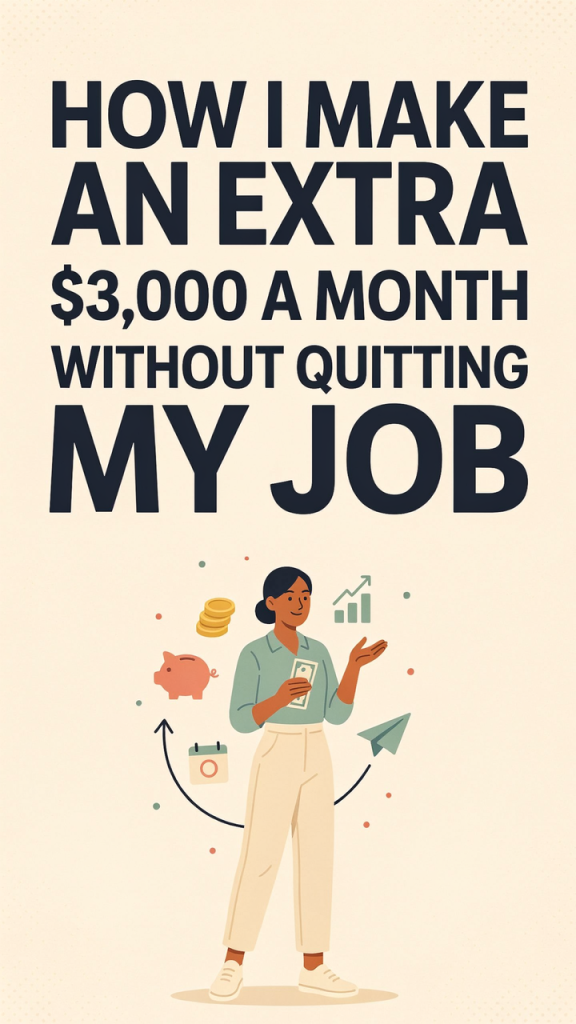
Have you ever looked at the calendar, counted the bills, and wondered how you’d bridge the gap without handing in your resignation? I’ve been there — juggling a full-time job, family commitments, and the nagging feeling that there must be a smarter, flexible way to bring in extra income. A little over two years ago I started a simple niche blog, added a few small sales funnels, and grown that side hustle into a dependable way to make an extra $3,000 a month — all without quitting my job. If you’re a stay-at-home mom or anyone who needs flexible income, here’s exactly how I did it and how you can too.
What the side hustle is
My side hustle is a niche content blog combined with simple sales funnels: I publish helpful, search-optimized posts for a specific audience, capture email subscribers with a free lead magnet, and monetize through affiliate recommendations and my own low-cost digital products (checklists, templates, and short courses). The core components are:
- A focused niche and audience (so content hits a specific problem).
- Pillar blog posts that attract organic search traffic.
- A lead magnet that converts visitors into email subscribers.
- An automated email funnel that nurtures trust and pitches offers.
- Monetization via affiliate links, product launches, and occasional paid promotions.
This setup is flexible, inexpensive to start, and you can scale each piece independently as traffic and revenue grow.
Build “A $373/Day AI Powered Side Hustle In Just 5 Days”
Follow the step-by-step training to turn practical AI skills into a focused income stream.
Why it works
There are a few reasons this model works well for busy people:
- Leverage and compounding: A blog post can keep bringing in traffic months (even years) after you publish it. One great post can be an income source for a long time.
- Automation: Email funnels and evergreen sales pages can sell while you sleep or while you’re spending time with family.
- Low overhead: Hosting, an email provider, and a basic WordPress theme are all you need to start.
- Flexibility: You can publish when you have time (5–10 hours a week is enough initially).
- Multiple revenue streams: Affiliate income + digital products + occasional sponsorships mean you’re not reliant on a single source.
For stay-at-home parents or anyone with limited hours, those three traits — leverage, automation, and low overhead — make the difference between a hobby and a reliable income stream.
How to get started — step-by-step
Here’s a simple roadmap I used. You don’t need perfection; a consistent, focused approach beats perfect planning.
- Pick a niche and define your audience (1–2 days)
- Choose a specific problem you can solve (e.g., “budget meal planning for busy families” rather than just “food”).
- Make sure you can talk about it consistently and that people search for answers.
- Validate the niche (2–4 days)
- Do quick keyword research: find long-tail questions (use tools like Google’s search suggestions, Keyword Planner, or free tools).
- Check competitors: are there profitable blogs or products in this space? If yes, that’s a good sign.
- Set up your blog (1–3 days)
- Buy a domain and affordable hosting (many starter plans are low-cost).
- Install WordPress, pick a clean theme, and add essential plugins (SEO, caching, forms).
- Keep it simple — content matters more than fancy design.
- Create a 90-day content plan (1–2 days)
- Identify 3–5 pillar posts (long, in-depth posts that answer big problems).
- Plan supporting posts that link to those pillars.
- Aim for quality over quantity: one great post a week is better than multiple thin posts.
- Build a lead magnet and email funnel (1–2 weeks)
- Create a simple freebie: a checklist, meal plan, template, or short PDF that solves a specific pain point.
- Use an email provider (ConvertKit, MailerLite, or similar) to capture subscribers and automate a welcome sequence (3–5 emails) that builds trust and introduces your best affiliate/product offer.
- Monetize (ongoing)
- Add relevant affiliate links in posts and emails where they genuinely help.
- Create a low-priced digital product after your first 100–500 subscribers (e.g., $27–$97).
- Consider ad networks later, once traffic is consistent.
- Promote and optimize (ongoing)
- Share posts to Pinterest and relevant Facebook groups (Pinterest is especially evergreen for blog traffic).
- Optimize posts for SEO: title tags, meta description, internal links, and helpful images.
- Track conversions (email signups, sales) and improve underperforming funnels.
Start small. I published three solid posts the first month, launched a 5-page checklist as my lead magnet, and had my first affiliate sale within six weeks.
Realistic income expectations
Here’s the honest timeline and numbers you can expect (results vary):
- Month 0–3 (Setup): $0–$200. You’re building content, your first lead magnet, and your email list. Early ad hoc affiliate sales are possible.
- Month 3–6 (Growth): $200–$800. Organic traffic begins to show. Your email list is 100–500 people. Small product sales and regular affiliate commissions start to appear.
- Month 6–12 (Momentum): $800–$3,000+. With consistent publishing, SEO traction, and a product or two, hitting $1,000–$3,000/month is realistic for many niches.
- Year 1+ (Scale): $3,000+ and growing. You’ll have evergreen funnels, multiple products, and improved conversion rates.
Example path to $3,000/month:
– Digital product (a $47 course/template) — 60 sales = $2,820
– Affiliate products — $500
– Small recurring income (ads/small services) — $200
Total = $3,520
Alternative: fewer, higher-ticket sales (e.g., one $500 coaching client x 6 per month) can also reach $3k but usually requires more direct work. My route relied on low-cost products and scalable affiliate commissions so I could keep my job.
Tips to scale
Once you hit consistent income, scale with these proven moves:
- Double down on top-performing posts: update them, add depth, and drive paid traffic to winners.
- Repurpose content: turn posts into Pinterest pins, YouTube videos, or Instagram carousels.
- Create upsells: a low-cost product can lead into a higher-priced bundle or mini-course.
- Use paid ads selectively: run small-budget Facebook or Pinterest ads to a high-converting lead magnet.
- Hire help: a virtual assistant for content promotion or a freelance writer for posts frees up your time.
- Improve conversions: A/B test email subject lines, call-to-action buttons, and landing pages.
- Build partnerships: guest posts, podcasts, and joint webinars extend your reach quickly.
Scaling is often about better conversions and distribution, not always more content.
Common mistakes to avoid
I made — and watched others make — these mistakes. Avoid them early:
- Trying to be everything to everyone: pick a narrow niche and solve a clear problem.
- Ignoring the email list: traffic is great, but the list is where relationships (and repeat sales) happen.
- Chasing every shiny tool: you don’t need expensive software to start. Invest in time and content first.
- Publishing low-quality posts for quantity’s sake: one helpful, well-optimized post beats five weak ones.
- Not tracking conversions: if you don’t measure, you can’t improve. Track clicks, opt-ins, and sales.
- Launching products too early: validate demand with audience feedback first.
- Inconsistency: inconsistent publishing and email cadence kill growth. Even small, regular effort wins.
Conclusion — start today
You don’t need to quit your job or make a massive upfront investment to build a side income that pays $3,000 a month. Start with one focused niche, publish helpful content, build a small email list with a useful lead magnet, and add a simple sales funnel. Invest a few hours a week — consistency matters more than perfection.
Take one small action today: pick your niche and write the outline for your first pillar post. If you commit 30 minutes today and one hour three times this week, you’ll be farther along than most people who only plan. Ready to start? Leave a comment below with your niche idea or subscribe to the blog to get my free checklist for launching your first funnel — it’s the exact process I used to go from zero to $3,000/month without quitting my job.