Niche down and build a clear value ladder
Description
I stopped trying to be everything to everyone. I narrowed my focus to “blogging monetization for part-time creators” and mapped a simple value ladder: free resources → low-cost lead magnet → $27 micro-course / template → $197 premium course or coaching call. That clarity made all my copy and offers much more compelling.
Actionable tips
– Define a single customer avatar (who, problem, goal). Write a one-sentence description you can memorize.
– Map a 3-step value ladder: free lead magnet, low-ticket product (< $50), higher-ticket offer ($100+).
– Align every piece of content to move readers one step up the ladder (awareness → trust → purchase).
Real-world context
With a narrow niche I stopped wasting time on generic posts. My homepage and pillar articles spoke directly to “part-time creators who want a simple funnel,” which doubled my email opt-in rate on those pages.
Ready for a guided, five-day action plan?
Create SEO-focused content that targets buyer intent
Description
Instead of chasing broad keywords, I targeted long-tail phrases with clear intent — things like “best email funnel for bloggers” or “how to sell templates to blog readers.” These queries attract visitors who are ready to consider a purchase or sign up for a tool.
Actionable tips
– Use tools: Google Search Console for existing query ideas, Keywords Everywhere or Ahrefs (or free Ubersuggest) for long-tail ideas.
– Prioritize “how to” + “buying intent” queries (e.g., “how to create a content upgrade that converts”).
– Write focused posts: solve one problem, include a clear CTA to a related lead magnet or product.
Real-world context
One long-tail post I targeted ranked on page one for a low-competition phrase and drove 250 qualified visits/month. That post alone generated 40% of the opt-ins that ultimately turned into paid sales.
Build a small, highly targeted email list and micro-funnels
Description
My email list was only a few hundred subscribers, but I made each subscriber more valuable. I created micro-funnels (small, automated sequences) that matched the content someone read to a specific offer, rather than blasting the same sequence to everyone.
Actionable tips
– Offer a relevant lead magnet on each high-intent post (checklist, swipe file, template).
– Create a 5-email onboarding sequence:
1. Welcome + deliver lead magnet
2. Quick wins / case study
3. Helpful tutorial (free content)
4. Soft pitch for a low-ticket offer (tripwire)
5. Final reminder + social proof
– Segment subscribers by source (content topic or tag) to send targeted offers.
Real-world context
My tripwire converted at ~6–8% among the subscribers who came from the specific post it related to. That initial $27 sale lowered CAC for later upsells and helped reach $5,847 quickly.
Use three monetization streams that complement each other
Description
Relying on one income stream is risky. I combined affiliate revenue, a low-ticket digital product, and a few productized consulting sessions. Each stream reinforced the others and created multiple touchpoints to convert readers.
Actionable tips
– Affiliate promotions: recommend tools you genuinely use and include honest mini-reviews + tutorial showing use-case.
– Low-ticket product: create a 1–3 hour course or template bundle priced $19–$49 for impulse buys.
– Productized services: offer a one-off, limited-scope service (e.g., 60-minute blog funnel audit for $197).
Real-world context
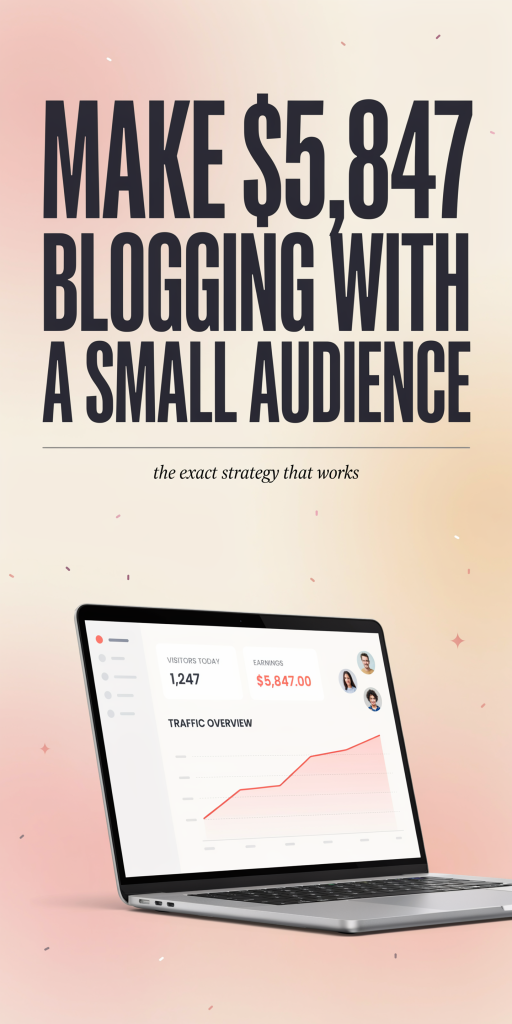
In my three-month run, earnings breakdown was roughly: $2,100 from a targeted affiliate campaign, $2,500 from low-ticket course sales, and $1,247 from a few consulting calls. The transitions were natural — a subscriber who bought the course later booked a paid audit.
Optimize conversion with content upgrades and clear CTAs
Description
Small changes to where and how I asked for action dramatically improved conversion. Instead of generic CTAs, I used content upgrades — bonus resources specific to the post — and placed CTAs for offers near “purchase intent” content.
Actionable tips
– Add content upgrades inside blog posts (e.g., “Get the exact email swipe file used in this post”).
– Use context-sensitive CTAs: inline buttons for readers, sidebar for browsers, and an exit-intent popup for skimmers.
– Test CTA copy: “Get checklist” vs. “Download swipe file” vs. “Start my funnel” and track results.
Real-world context
A content upgrade on one pillar post increased opt-ins from 2.1% to 6.4%. Those opt-ins fed the micro-funnel that produced multiple tripwire sales.
Promote intelligently: newsletters, reposts, and very targeted ads
Description
With a small audience, you can’t rely on organic reach alone. I used my newsletter, repurposed content, and a small ad budget to amplify what worked, prioritizing ROI over reach.
Actionable tips
– Repurpose one pillar post into 3 micro pieces (email walkthrough, short video, and tweet thread).
– Use email to re-promote offers to engaged segments (clicked/opened in last 30 days).
– Run small paid tests ($5–$15/day) to drive traffic to best-performing pages; scale winners.
– Use retargeting ads to people who visited a product page but didn’t buy.
Real-world context
A $200 ad test to a tripwire page delivered a 12x ROAS (return on ad spend) once I refined the audience. I kept ad spend modest and focused on retargeting warm traffic from content and emails.
Track, iterate, and keep a consistent publishing + testing habit
Description
I treated the blog like a funnel optimization project, not a publishing schedule alone. Weekly reviews of traffic, email conversion, and ad performance helped me make small, consistent improvements.
Actionable tips
– Track three KPIs: traffic to money pages, email opt-in rate, and conversion rate on offers.
– Run one A/B test per week (CTA copy, button color, opt-in headline).
– Publish one high-intent post every two weeks and promote it heavily for 14 days.
– Schedule a 30–60 minute weekly review to record wins and next tests.
Real-world context
Small, frequent tests (e.g., changing the lead magnet headline) moved conversion metrics enough to compound into significant revenue increases. Consistency beat sporadic bursts every time.
Mindset: value > vanity, and small audience = focused buyers
Description
The biggest shift was valuing depth over breadth. A small, engaged audience is easier to convert than a large, passive one. One email to 300 well-segmented subscribers can outperform a social blast to 10,000 followers.
Actionable tips
– Prioritize emails and product pages over chasing follower counts.
– Double down on offers that get actual purchases, not just clicks.
– Celebrate micro-wins and iterate fast — momentum matters.
Real-world context
When I treated each subscriber as a potential customer rather than a vanity metric, my conversion-focused copy improved and revenue followed.