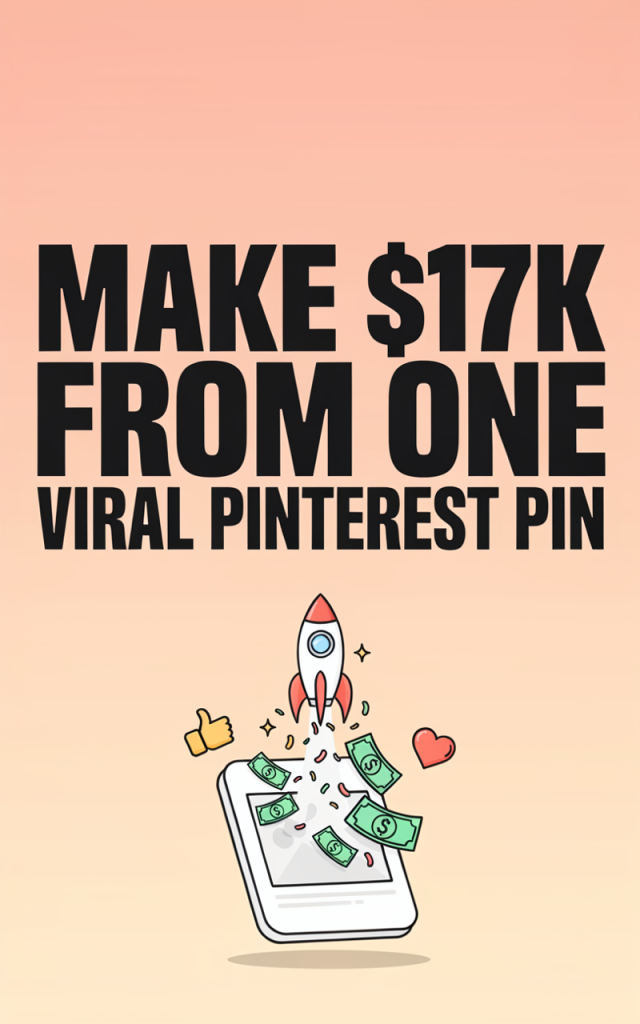
I still get goosebumps thinking about that moment: one pin went viral, and within a few weeks it funneled readers into a simple system that paid me $17,639. If you’re a stay-at-home mom wondering if Pinterest can really move the needle — it can — and you don’t need fancy tech skills to make it happen. Below I’m going to walk you through the exact business idea I used, step-by-step setup you can follow this afternoon, and a realistic breakdown of startup costs so you can decide if it fits your family rhythm.
Business idea: Turn one viral Pinterest (my traffic source) pin into a productized side hustle (free summit) that sells a low-ticket offer and an automated sales funnel (HighLevel)
Description
– The concept is simple: create a high-converting Pin that drives targeted traffic to a single landing page (or post) offering a low-cost digital product (printables, mini-course, template, or membership trial). That low-ticket sale then moves people into an automated sales funnel (HighLevel) that pitches a higher-value offer. The math from one viral Pin — multiplied by a well-built funnel — is how I reached $17,639.
– This is ideal if you want a flexible side hustle (free summit) that you can run around naps, school drop-offs, and soccer practice. You’re leveraging evergreen Pinterest traffic and automation so your income is largely decoupled from your hourly time.
Practical setup steps (what I did, and what you can copy)
1. Pick a target audience and product idea
– Decide who you want to help (e.g., busy moms who meal-plan, toddler sleep coaching, printable planners). Validate quickly by searching related keywords on Pinterest (my traffic source) and seeing what’s popular.
2. Create a viral-ready Pin
– Write a clear promise headline on the Pin image (e.g., “5 Meals in 30 Minutes: Weekly Plan + Shopping List”).
– Use a tall image, bold typography, and a single strong CTA. If you don’t design, hire a designer on Fiverr (quick freelance design) or post a request on Upwork (freelancers here).
3. Build the landing page and funnel
– Option A: Send traffic to a focused landing page that sells a $7–$27 digital product.
– Option B: Send traffic to a helpful blog post (if you’re starting your blog) that links to the product. If you choose a blog, get reliable website hosting (WPX) first.
– Integrate an automated sales funnel (HighLevel) or an email sequence so people who buy the low-ticket item see an upsell for a $47–$297 product.
4. Set up payment and delivery
– Use Gumroad, SendOwl, or Stripe-Checkout to accept payments and deliver digital files. Make downloadable PDFs and a welcome email that feels personal.
5. Automate Pinterest distribution and scheduling– Use a social media scheduling (Tailwind/Buffer) tool to consistently pin your content and to push the Pin into group boards/strategic boards for faster momentum.
6. Optimize and scale
– Track which Pins convert. When one Pin begins to spike, double down: create variations, promote it within other boards, and consider a small promoted Pin budget if it’s already converting.
– Add a back-end offer: membership, mini-course, coaching call, or affiliate package. Use your sales funnel (HighLevel) to automate upsells and follow-ups.
Estimated startup costs (real numbers I used and what to budget)
– Domain name: $10–$15/year
– Website hosting (WPX): $20–$25/month (I used WPX for speed and support)
– Pin design: $5–$50 per Pin (use Fiverr (quick freelance design) or DIY with Canva)
– Landing page/funnel tool: $0–$97/month depending on tool; sales funnel (HighLevel) can replace multiple tools if you scale
– Scheduling tool for Pinterest: $15–$30/month (social media scheduling (Tailwind/Buffer))
– Initial ad budget (optional): $50–$300 to boost a high-performing Pin
– Outsourcing tasks (copy, email sequences): $50–$300 one-time via Upwork (freelancers here)
Total realistic launch budget: $100–$500 if you DIY most things; $500–$1,500+ if you outsource aggressively or run paid promotion.
Want a shortcut to a profitable AI-powered project you can set up quickly?
A few practical tips I wish I’d known sooner
– Focus on one funnel at a time. That viral Pin’s momentum is finite unless you optimize the funnel it feeds into.
– Track conversions, not just views. A million eyeballs means nothing if they don’t opt in or buy.
– Repurpose your Pin into multiple pins and headlines — little changes often re-ignite traffic.
– If you’re not confident in writing sales pages or emails, hire a short-term freelancer on Fiverr (quick freelance design) or Upwork (freelancers here) for a one-off gig.
If you’re a stay-at-home mom juggling a thousand small things, this model works because it concentrates effort: create one great Pin, build one strong funnel, and let automation do the heavy lifting. You don’t need to be online all day — you need a repeatable system and a little patience while the pin gains momentum. If you follow the steps above and keep serving a real problem for your audience, that first viral hit could be the start of something sustainably profitable.