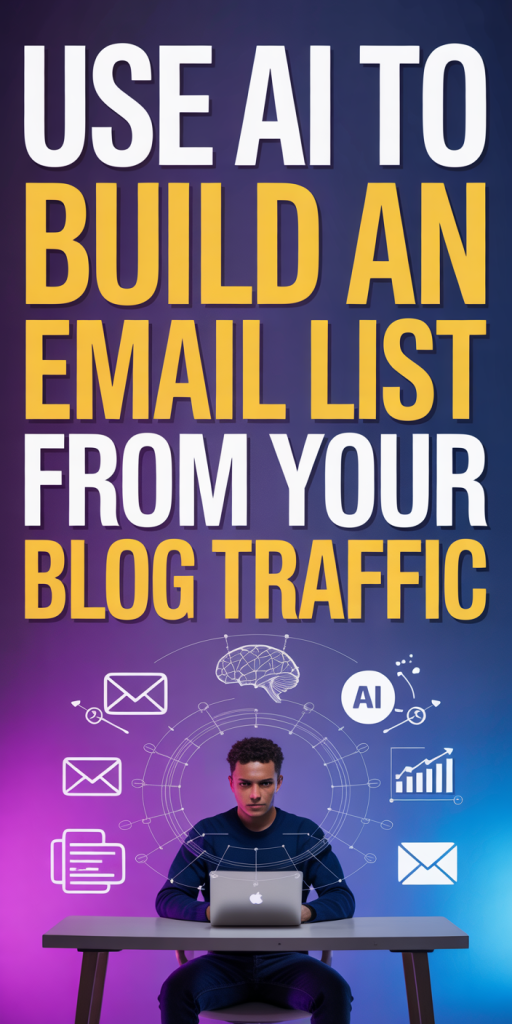
We’ve spent years growing audiences the old-fashioned way: great posts, steady promotion, and a few clever lead magnets. Lately, though, AI has become the multiplier that turns casual readers into subscribers faster and with less guesswork. In this guide we walk through how to use AI to build an email list from your blog traffic, practical steps, tools, and tactics you can carry out this week to capture more leads, personalize outreach, and scale nurturing without burning our team out.
Why Use AI To Build An Email List From Your Blog
AI isn’t a gimmick: it’s a productivity and insights engine for list building. When readers find a helpful article, their intent is often latent, curiosity, comparison, or purchase planning. AI helps us recognize that intent, craft offers they’ll actually respond to, and automate follow-ups at scale. Instead of guessing which posts convert, we can use machine learning to surface high-value pages, personalize opt-ins in real time, and optimize messaging across thousands of visitors. The result: higher opt-in rates, better quality leads, and email sequences that feel one-to-one even when they’re not.
Beyond conversion lift, AI shortens experimentation cycles. Where we once A/B tested subject lines for weeks, generative models can propose dozens of high-probability candidates, letting us iterate faster. And predictive scoring can prioritize leads most likely to convert, so our sales or product teams engage where it matters. In short, AI turns blog traffic from anonymous sessions into a predictable, scalable source of engaged subscribers.
Ready To Build A More Flexible Income Stream?
Get Your Blog Ready: Data, CTAs, And Tracking
Before applying AI, we need clean inputs. Small data problems compound quickly when models generate actions.
Audit Traffic And Identify High-Intent Pages
First, audit your analytics to find pages that already attract engaged visitors. Look beyond pageviews: measure time on page, scroll depth, return visits, on-page events (clicks to affiliate links, PDF downloads), and conversion funnels. High-intent pages often include product comparisons, how-to guides, and pricing-related content. Tag these pages as priority candidates for AI-driven capture tactics.
We recommend exporting 90 days of behavior data and mapping pages into buckets (top-of-funnel, consideration, conversion-intent). This segmentation gives AI models meaningful context for personalization and lead scoring.
Carry out Tracking, Consent, And Clear Opt-Ins
Next, make sure tracking is robust and privacy-compliant. Carry out server-side analytics or first-party tracking where feasible, add consent banners that integrate with your tag manager, and ensure email capture tools honor GDPR/CCPA preferences. Use consistent UTM parameters and hidden form fields to preserve source metadata, AI-driven personalization works best when it can reliably attribute traffic source, campaign, and content context.
Finally, design clear, relevant CTAs on priority pages. A generic “Subscribe” won’t cut it. Offer a specific value proposition, an industry checklist, short course, or a tailored content bundle. These will be the hooks AI will optimize and personalize.
AI-Powered Lead Capture Tactics For Blog Visitors
AI gives us more ways to capture attention without being intrusive. Here are practical capture tactics that integrate smoothly with blog reading behavior.
AI-Generated Lead Magnets, Smart Popups, And Personalized CTAs
We can use generative AI to create lead magnets tailored to specific posts. For example: summarize a long guide into a printable cheat sheet, convert a how-to series into a mini email course, or generate a custom checklist based on the article’s steps. These assets are faster to produce than manual creation and can be A/B tested across posts.
Smart popups powered by on-page signals are another win. Rather than triggering after a fixed scroll percent, use AI to predict disengagement or intent to exit and show a contextual offer, like a one-click download or a topic-specific email course. Personalized CTAs take this further: a CTA’s copy, format (modal vs inline), and incentive can be tailored to the visitor’s inferred industry or problem, raising opt-in likelihood without increasing friction.
Conversational Chatbots And On-Page Assistants For Lead Capture
Conversational interfaces are a low-friction way to capture emails while helping visitors. Instead of a long form, we deploy a chatbot that asks one or two contextual questions and offers to email resources or schedule a demo. AI-driven chatbots can parse free-text answers, recommend the best lead magnet, and ask for an email as the natural next step.
We’ve seen chat capture rates outperform static forms on complex topics because they mimic human help. Integrate the bot with your CRM and email platform so every chat transcript and inferred intent is stored, those signals power downstream personalization and scoring.
Automate Welcome And Nurture Sequences With AI
Capturing an email is just the start. AI helps us craft onboarding that converts readers into loyal subscribers.
Generate Welcome Emails, Subject Lines, And Sequences
We use AI to draft welcome emails, suggest subject lines, and build multi-step sequences tailored to the lead magnet or the page they came from. A welcome from a pricing comparison reader differs from one who downloaded a beginner’s checklist, tone, next steps, and CTA should match intent.
AI can generate dozens of subject lines and preview texts ranked by predicted open rate. That saves time and gives us high-performing variants for quick A/B tests. Use these models to localize copy, shorten or lengthen messages, and propose dynamic content blocks (e.g., customer story vs feature highlight) based on segment.
Triggered Flows And Personalization Tokens
Triggered flows are where AI really scales personalization. Set up triggers based on behavior, re-opened emails, visits to pricing pages, or repeated article reads, and let AI adapt sequence content. Personalization tokens can go beyond name and company: mention the article they read, the specific pain point they shared in chat, or the checklist item they downloaded. These small touches increase engagement and reduce churn in early sequences.
Segment, Score, And Personalize Using AI Insights
AI shifts segmentation from static lists to dynamic, predictive groups.
Predictive Segmentation And Dynamic Email Content
We build predictive segments based on engagement signals and inferred intent, likelihood to purchase, topic affinity, or churn risk. Models can score leads immediately upon capture, routing high-value prospects to expedited sales workflows and placing casual readers into longer nurture tracks.
Dynamic email content uses those scores in real time: swap hero images, adjust CTAs, and vary offers depending on a recipient’s segment. For instance, a high-intent lead sees case studies and demo CTAs: a low-intent reader gets foundational tips and a lighter ask. This reduces irrelevant messaging and improves conversions without multiplying manual campaigns.
Measure, Test, Comply, And Scale Your AI-Driven List Building
To keep momentum, we measure, iterate, and enforce guardrails.
Key Metrics, A/B Testing, And Scaling Playbook
Track conversion rate (visitor → subscriber), lead quality metrics (engagement, MQLs), deliverability, and downstream revenue attribution. Pair those with micro-metrics like popup-to-opt-in rate and chatbot completion rate.
A/B test AI outputs, subject lines, lead magnets, popup timing, so the model’s suggestions are validated against real visitor behavior. Use multi-armed bandit approaches for subject lines and personalization variants to optimize faster.
Compliance and ethical use are non-negotiable. Maintain clear consent records, provide simple unsubscribe and data deletion paths, and avoid manipulative UX patterns. Regularly review AI-generated copy for accuracy, especially when models summarize product features or make claims.
Finally, scale by templating what works: store high-performing lead magnet templates, subject line formulas, and chatbot flows. Automate model refreshes with recent performance data so recommendations evolve with audience behavior.
Using AI to build an email list from your blog traffic doesn’t mean replacing human judgment, it’s about amplifying it. We can identify intent faster, create tailored offers at scale, and automate sequences that feel personal. Start small: audit pages, deploy one AI-backed lead magnet, and run controlled tests. Measure what matters, keep privacy and accuracy front and center, and iterate. Do this, and our blog becomes a reliable, scalable engine for high-quality subscribers.