We built The AI Blogging System That Saves Me 20+ Hours a Week because publishing high-quality content used to dominate our calendar. Between research, drafting, SEO, images, and formatting, a single long-form post could eat up a full day, often more. We needed a repeatable, efficient process that kept our voice intact, improved output quality, and freed time for strategy and distribution. This article lays out why we created the system, its components, our step-by-step workflow, the tools we trust, concrete time savings, and the ethical guardrails we follow.
Why I Built An AI Blogging System
We built this AI blogging system because the old way of producing content wasn’t scalable. We were juggling multiple roles, researcher, writer, editor, SEO analyst, and publisher, and each role had repetitive tasks that an AI could handle faster without sacrificing quality. More importantly, we wanted to move from reactive publishing (chasing hot topics) to proactive, strategic content that grows traffic and conversions over time.
Three practical pain points drove us: 1) research took too long: 2) drafting sapped creative energy: and 3) post-production (formatting, images, SEO tweaks) was tedious. By automating the heavy lifting and preserving human oversight for voice and judgment calls, we reclaimed hours every week while improving consistency and throughput. The system isn’t magic, it’s a set of integrated tools, templates, and checks designed to make content work smarter, not harder.
Core Components Of My System
Our system has five core components that together handle the lifecycle of a post.
AI Content Research And Idea Generation
We feed a blend of keyword data, trends, and user intent queries into AI tools to generate a ranked list of topic ideas and content angles. The AI surfaces supporting stats, competitor snippets, and likely questions readers ask, which speeds our briefing step from hours to minutes.
Automated Drafting And Editing
Once we approve a brief, the drafting engine (with structured prompts and voice guidelines) produces a first draft. The draft includes suggested headings, intro hooks, and supporting examples. AI also handles an initial edit pass for clarity and grammar, leaving us to focus on nuance and insight.
SEO Optimization And Headline Testing
We integrate SEO checks into the draft stage: keyword placement, internal linking suggestions, meta descriptions, and headline variants. We A/B test headlines (and often lead paragraphs) to pick versions that perform better in CTR and readability.
Publishing, Formatting, And Images
Automated formatting templates convert drafts to CMS-ready HTML: subheadings, schema markup, alt-tagged images, and callouts. We use AI image generators and stock integrations to produce visuals that match the article tone and dimensions without long designer queues.
Analytics And Continuous Improvement
After publishing, the system tags content for tracking and runs scheduled performance reports. AI helps interpret signals (dwell time, CTR, SERP movement) and suggests refreshes or link-building opportunities to sustain rankings.
Step-By-Step Workflow: From Idea To Publish
We follow a consistent workflow so every post moves predictably through the pipeline.
Weekly Planning And Topic Prioritization
Each Monday we run a topic scan using keyword and trend tools, then ask the AI to rank ideas by traffic opportunity, effort, and strategic value. We lock a 4–6 item sprint for the week.
Automated Research And Brief Generation
For chosen topics, the AI compiles a brief: target keywords, intent, competitor outlines, relevant stats, and a proposed outline. This brief is often 80% complete and takes us about 10–20 minutes to review and tweak.
AI Drafting With Structured Prompts
We use a standardized prompt that includes voice notes, length targets, required sections, and banned phrases. The AI generates a draft in roughly the time it takes us to make coffee, then we run an automated quality pass for factual flags and tone alignment.
Human Editing Passes And Style Checks
Editors focus on adding original insights, anecdotes, and data interpretation. This is where we protect our voice. AI does heavy grammar and structure work: humans inject judgment.
Final Formatting, SEO Checks, And Scheduling
A final automated step converts the content to the CMS template, inserts images, writes the meta description, and queues the post. We run a last SEO checklist and schedule the publish time based on audience analytics.
Tools And Integrations I Rely On
Our stack mixes large language models, SEO suites, CMS tools, and automation platforms.
AI Models And Prompting Tools
We use a mix of models (current high-quality LLMs) and a prompt library to ensure consistency. Prompt versioning and templates are essential, they keep drafts reproducible and on-brand.
SEO And Keyword Tools
Tools like Ahrefs, SEMrush, and a page-level optimizer (SurferSEO or similar) feed data into our briefs. These provide keyword difficulty, SERP feature opportunities, and competitive gap analysis.
CMS, Scheduling, And Image Tools
WordPress remains our primary CMS with a visual builder and schema plugins. For images we use a mix of AI generators and vetted stock providers to match licensing needs. Scheduling and social auto-posting go through Buffer or native CMS integrations.
Automation And Integration Platforms
Zapier, Make (Integromat), or n8n connects our tools: a new accepted brief triggers drafting, which when approved triggers formatting and scheduling. These integrations remove manual handoffs and reduce errors.
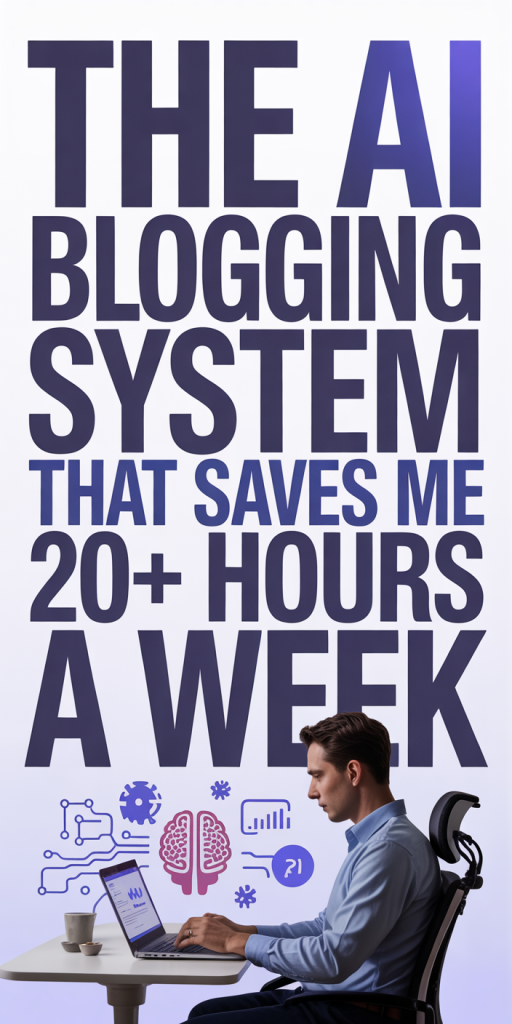
How I Save 20+ Hours A Week
The time savings add up because we automate the most time-consuming, repetitive tasks while keeping humans for high-leverage decisions.
Before Vs After: Task Time Comparison
Before: topic research (6–8 hrs), drafting (6–10 hrs), editing/formatting (4–6 hrs), images/SEO (2–4 hrs) = ~20–28 hrs per week for multiple posts. After: research (1–1.5 hrs), AI drafting (1–2 hrs for supervision), editing (3–4 hrs), formatting & images (0.5–1 hr) = ~6–9 hrs. Net savings: 14–22+ hours depending on volume.
Typical Weekly Time Savings By Task
- Research & briefs: 70–80% faster
- Drafting: 60–80% faster
- Formatting & images: 80–90% faster
These are conservative estimates based on our weekly sprints.
Example: A 2,000‑Word Post From Start To Publish
- Topic selection & brief: 20 minutes
- AI draft generation: 25–40 minutes
- Human editing and value adds: 2–3 hours
- Final formatting, images, SEO tweaks: 30–45 minutes
Total: ~4–5 hours vs. the previous 10–14 hours for the same depth and polish.
Best Practices, Safeguards, And Ethics
Automation isn’t a shortcut to sloppy content. We enforce rules to preserve quality and trust.
Preserving Voice And Audience Relevance
We keep a style guide and voice kit the AI must reference. Editors always add at least one original insight or anecdote so content reads like us, not an aggregator.
Fact‑Checking, Sources, And Bias Mitigation
Every factual claim or statistic coming from AI is cross-checked against primary sources. Where the model can’t cite a source, we flag the statement for manual verification. We also prompt the model to surface contrary perspectives to reduce confirmation bias.
Copyright, Transparency, And Disclosure
We respect licensing for images and data. When AI plays a substantial role in writing, we include transparent disclosure in our editorial notes or site policy. We avoid passing AI output as sole human authorship without review.
Conclusion
The AI Blogging System That Saves Me 20+ Hours a Week is less about replacing writers and more about reallocating human energy to higher-value activities: strategy, creative insight, and audience engagement. By building guardrails, versioned prompts, and a tight automation layer, we publish more, faster, and with better consistency, while staying true to our voice and ethics. If you’re drowning in content tasks, start by automating one repeatable step (research or drafting) and measure time saved. Small automations compound quickly: before long you’ll have hours back every week to focus on growth.