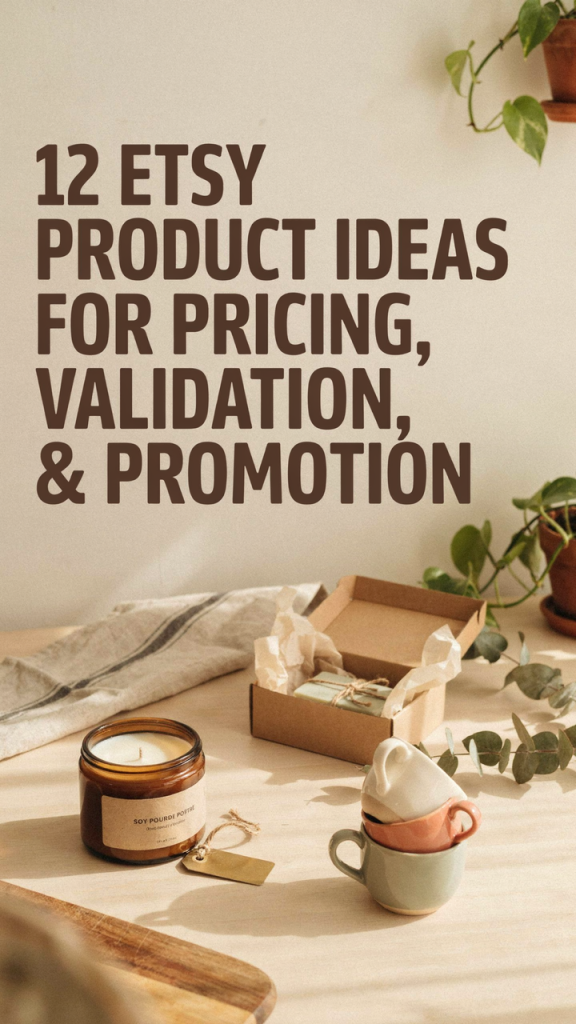
Choosing what to sell on Etsy shapes everything that follows: your time, your upfront costs, how fast you can scale, and whether repeat customers will find you. This guide organizes 17 product ideas by the demand attributes that most reliably predict success on Etsy — low startup cost, ease of scaling, SEO potential, and high perceived value. For each idea you’ll get why it sells, realistic startup cost ranges, pricing rules of thumb, a fast validation experiment, listing and photography tips, and simple upsell or cross‑sell moves. Read it with the intent to pick three ideas, validate them in the next 30 days, and have your first sale within 60.
Key Takeaways
How to use this article
– Quick validation checklist (use before building inventory)
– Can you describe the target buyer in one sentence? (e.g., “brides looking for affordable modern place cards.”)
– Is there an existing search demand or community (Pinterest boards, Facebook groups, hobby forums) for this product?
– Can you produce a convincing sample or mockup within a week?
– Can you deliver within a reasonable turnaround (7–21 days) for a first customer?
– Is the cost plus fees less than 40–50% of the price you think customers will accept?
- Startup cost bands you’ll see below (approximate)
- Very low: $0–$100 — digital products, mockups, basic software.
- Low: $100–$500 — small tools, materials for samples, packaging.
- Moderate: $500–$2,000 — equipment like a good printer, engraving tools, or supplies for an initial stock.
- Higher: $2,000+ — investment in specialized machinery but still common for niche shops.
- How to pick 3 ideas to test
- One ultra‑low‑risk (digital or POD) for immediate listing.
- One tangible product with clear visual appeal and modest setup cost.
- One personalized/high‑value product that justifies longer lead time but higher margins.
Ready to turn an idea into practical income?
Demand attributes that predict success on Etsy
– Search intent: Buyers who actively search for a nameable product on Etsy (e.g., “wedding place cards,” “printable budget planner”) are easier to convert than buyers who stumble on cute items.
– Repeat purchase potential: Consumables or items with seasonal variations keep customers coming back.
– Personalization options: Buyers pay premiums for names, dates, or custom colors.
– Margin: High perceived value relative to raw cost — packaging and photography can raise perceived value cheaply.
– Visual appeal: Highly photogenic products perform better; thumbnails need to stand out in a feed.
How each product idea is presented
For every item below you’ll find:
– What it is and why it sells
– Typical materials/tools
– Startup cost estimate
– Pricing rule of thumb
– Quick validation test (5–7 days)
– Listing & photography tips
– Bundling / upsell ideas
Category A — Low‑overhead digital and printable products
- Printable wall art and downloadable posters
– What it is / why it sells: Instant‑download art appeals to buyers who want affordable decor that’s easy to print and change. Niches: nursery prints, motivational quotes, abstract sets, seasonal decor.
– Materials/tools: Graphic design software (Affinity Designer, Canva, Adobe alternatives), mockup templates.
– Startup cost: Very low ($0–$150).
– Pricing rule: $3–$15 per file; offer bundles (3–10 prints) at higher combined price.
– Validation test: Create 3 mockups in a focused niche, list one inexpensive print, run a small targeted Pinterest pin or an Instagram post for one week to gauge saves and clicks.
– Listing & photos: Provide multiple aspect ratios and use clean mockups in realistic room settings. Include a close‑up of texture and a downloadable details image showing file types/sizes.
– Bundles/upsells: Offer printable bundles, framed mockup upsell (partner with a local framer or offer print + frame as a fulfillment add‑on).
- Planner pages, habit trackers, printable organizers
– What it is / why it sells: Planners convert because buyers want systems to improve productivity; they’re evergreen and lend themselves to subscriptions and expansions.
– Materials/tools: Template software, optionally a PDF creation tool and cloud delivery system.
– Startup cost: Very low ($0–$200).
– Pricing rule: Single pages $2–6; complete planners $10–30; subscription or update packs monthly $3–8.
– Validation test: Offer a free sample page in exchange for an email, then promote paid bundles to that list.
– Listing & photos: Show usage (e.g., photographed flat lay with pens), include screenshots of printable sizes, and explain printer settings.
– Bundles/upsells: Add stickers, printable covers, or a bundled physical print option; offer a “lifetime planner pack” discount.
- SVGs, clipart and craft files for hobbyists
– What it is / why it sells: SVGs and clipart are in demand by crafters who use cutting machines or digital projects; sellers benefit from repeat customers.
– Materials/tools: Vector software (Inkscape, Illustrator), basic licensing templates.
– Startup cost: Very low ($0–$200).
– Pricing rule: Single SVG $2–10; themed packs $8–40 depending on complexity.
– Validation test: Create 5 themed files and list a bundle; post samples in craft Facebook groups and track interest.
– Listing & photos: Provide clear sample mockups on shirts, mugs, or paper crafts; include a screenshot of the SVG paths and list compatible software.
– Bundles/upsells: Offer commercial-use license upsell, or monthly subscription packs for crafters.
Category B — Personalized and giftable items with high perceived value
- Custom name jewelry (simple chains, stamped tags)
– What it is / why it sells: Personalization makes inexpensive metal look meaningful; good for gifts.
– Materials/tools: Stamping tools, basic jewelry pliers, chains, tags, polishing supplies.
– Startup cost: Low to moderate ($200–$1,200).
– Pricing rule: $20–$60 for simple stamped pieces; $60–$150 for higher‑quality materials.
– Validation test: Make 3 samples in different finishes, list one product with a 2‑week lead time, and promote to a small audience for preorders.
– Listing & photos: Use closeups of engraving details and scale shots on models; show personalization options clearly.
– Bundles/upsells: Gift boxes, cleaning cloths, or a matching set (bracelet + necklace).
- Engraved or printed keepsake boxes and frames
– What it is / why it sells: Keepsakes pair sentiment with craft; buyers expect gift‑ready presentation.
– Materials/tools: Laser engraver or provider partnership, wood boxes, picture frames, paint/finishing supplies.
– Startup cost: Moderate ($300–$2,000) if investing in a laser; lower if partnering with a maker.
– Pricing rule: $25–$80 for small boxes; frames $35–$150 depending on size and finish.
– Validation test: Offer one sample at a special price, collect preorders and use feedback to adjust copy and lead times.
– Listing & photos: Lifestyle photos, opened box showing interior, personalized imprint closeup.
– Bundles/upsells: Add gift wrapping, an insert card, or a matching ornament.
- Personalized party favors and signage
– What it is / why it sells: Events drive bulk, and buyers will pay for cohesive looks (birthdays, small weddings, baby showers).
– Materials/tools: Paper goods, vinyl cutter, digital printing access.
– Startup cost: Low to moderate ($100–$800).
– Pricing rule: Favors $2–10 each; signage $20–$120 depending on size and material.
– Validation test: Create a small themed sample kit and offer it at a discount to solicited party hosts for feedback.
– Listing & photos: Show multiples to communicate scale; include size, material, and lead time details.
– Bundles/upsells: Offer matching bundles (invites + favors + signage) and rush‑order tiers for extra fee.
- Custom pet tags and accessories
– What it is / why it sells: Pet owners spend on safety and style; personalization is standard.
– Materials/tools: Metal or acrylic tags, engraving tools, bandanas, sewing kit.
– Startup cost: Low to moderate ($150–$900).
– Pricing rule: Tags $8–30; bandanas and accessories $10–30.
– Validation test: Make a few samples and ask pet‑owner friends to share photos; list and watch for a week.
– Listing & photos: Show scale next to a pet, multiple color options, and clear font choices for engraving.
– Bundles/upsells: Combine tags with bandanas, matching bowl decals, or ID registration add‑ons.
- Printed apparel & accessories using print‑on‑demand (POD)
– What it is / why it sells: POD reduces inventory risk; focus on narrow designs and niches for discoverability.
– Materials/tools: POD account, mockup generator, simple branding assets.
– Startup cost: Very low ($0–$200) — mainly mockups and sample orders.
– Pricing rule: Base POD cost + 30–70% markup; price tees $18–35, hoodies $35–70 depending on print quality.
– Validation test: Create a focused design and run low‑spend social promotion; order samples to check print quality.
– Listing & photos: Use lifestyle mockups and one photographed sample. Clarify sizing and print placement.
– Bundles/upsells: Offer matching stickers, or a “bundle of the month” with a tee + sticker at a discount.
- Personalized digital portraits and caricatures
– What it is / why it sells: Customized art for gifts, social media, and anniversaries; buyers accept premium pricing for likeness and style.
– Materials/tools: Drawing tablet, illustration software, high‑res delivery formats.
– Startup cost: Low to moderate ($100–$1,000) depending on equipment.
– Pricing rule: Digital portraits $20–$150+; add printed canvases or expedited delivery for higher fees.
– Validation test: Produce 3 distinct styles and offer a discounted prelaunch slot in online communities.
– Listing & photos: Show before/after samples, detail shots demonstrating brushwork, and example framed prints.
– Bundles/upsells: Offer framed prints, additional characters (e.g., couple + pet), or color palette revision packages.
- Custom stationery and wedding suites
– What it is / why it sells: Weddings and events are high‑value purchases; trust and examples are essential.
– Materials/tools: High‑quality paper, design software, optionally a partnership with a print shop.
– Startup cost: Moderate ($200–$1,500).
– Pricing rule: Save‑the‑dates $2–4 each; full suites $250–1,500 depending on customization and printing.
– Validation test: Create a small sample book of designs and target local wedding groups or listings for inquiries.
– Listing & photos: Include full mockups, closeups of paper weight and finishes, and a timeline for revisions.
– Bundles/upsells: RSVP cards, signage, day‑of menus, and rush printing fees.
Category C — Low‑cost physical goods that scale
- Custom stickers and sticker sheets
– What it is / why it sells: Stickers are cheap to produce, easy to ship, and popular with planners, kids, and brands.
– Materials/tools: Sticker paper or print service, cutting tools.
– Startup cost: Very low ($50–$400).
– Pricing rule: Single stickers $1–6; themed sheets $4–15.
– Validation test: Offer a few designs in a themed pack and promote through Instagram or a small Facebook ad test.
– Listing & photos: Show stickers in use (on laptops, planners, water bottles), include scale shots.
– Bundles/upsells: Sticker subscription, pack discounts, or sticker + magnet combos.
- Enamel pins and embroidered patches
– What it is / why it sells: Collectible, giftable, and community-driven; limited runs create urgency.
– Materials/tools: Manufacturer relationship or crowdfunded batch orders.
– Startup cost: Moderate ($300–$2,000) depending on minimums.
– Pricing rule: Pins $8–25; patches $6–20.
– Validation test: Create a digital mockup, run preorders to cover minimums, or launch a limited drop.
– Listing & photos: High‑contrast closeups, scale references, and lifestyle images on jackets/bags.
– Bundles/upsells: Collector sets, enamel pin backers with artwork, or mystery grab bags.
- Hand‑poured soy candles
– What it is / why it sells: Candles offer high perceived value and repeat purchases if scents are good.
– Materials/tools: Wax, fragrances, wicks, jars, pour station.
– Startup cost: Moderate ($300–$1,500).
– Pricing rule: 8–16 oz candles $12–35 depending on scent complexity and packaging.
– Validation test: Make 3 scents and offer a sampler set; collect scent feedback and repeat order interest.
– Listing & photos: Warm lifestyle shots, wick and label closeups, and clear burn time estimates.
– Bundles/upsells: Seasonal scent bundles, refill programs, or candle + matchbox gift sets.
- Bath bombs and skincare bars (small‑batch)
– What it is / why it sells: Self‑care items are strong repeat categories; clean ingredient lists build trust.
– Materials/tools: Molds, fragrance/essential oils, packaging.
– Startup cost: Low to moderate ($150–$1,000).
– Pricing rule: Bath bombs $5–15; bars $6–18.
– Validation test: Create a small sample pack and offer to local markets or social followers for feedback.
– Listing & photos: Show fizz action, ingredient callouts, and gift packaging options.
– Bundles/upsells: Self‑care boxes, sample trays, or subscription refills.
- Resin jewelry and keychains
– What it is / why it sells: Unique, colorful pieces that offer personalization and trendy aesthetics.
– Materials/tools: Resin kit, molds, inclusions (dried flowers, glitter), safety gear.
– Startup cost: Low to moderate ($100–$800).
– Pricing rule: Keychains $8–30; jewelry $15–80.
– Validation test: Make a small variety pack and list them with clear variant options; test which colors sell first.
– Listing & photos: Use macro shots to show inclusions and shine, and include scale comparisons.
– Bundles/upsells: Matching pieces sets, or add‑on gift wrapping.
- Throw pillow covers and small home textiles
– What it is / why it sells: Home textiles elevate room looks and ship cheaply if sold as covers.
– Materials/tools: Sewing machine, fabrics, zippers.
– Startup cost: Moderate ($200–$1,200).
– Pricing rule: Pillow covers $18–60 depending on fabric and design.
– Validation test: Make 3 designs in popular sizes and list with mockups; track which patterns get favorites.
– Listing & photos: Show covers styled on sofas and include fabric closeups and care instructions.
– Bundles/upsells: Pillow cover + insert sets, matching table runners or throws.
- Hand‑painted ceramic mugs and tumblers
– What it is / why it sells: Functional art that people use daily; good margins and giftability.
– Materials/tools: Ceramic blanks or kiln, ceramic paints, sealants.
– Startup cost: Moderate ($200–$1,500).
– Pricing rule: Mugs $18–50; custom tumbler sets $25–80.
– Validation test: Paint a few signature styles, list them with mockups, and invite local pickup or low‑cost shipping.
– Listing & photos: Use lifestyle shots with props, show bottom stamp/artist mark, and care instructions.
– Bundles/upsells: Gift set with mug + coaster, or matching spoon/collar.
Realistic downsides and decision points
– Time vs. money: Digital goods are fast to launch but can be competitive; physical goods require fulfillment systems.
– Seasonality: Some categories peak seasonally (weddings, holidays). Balance evergreen and seasonal offerings.
– Lead time and returns: Personalized and handmade items often require clear, realistic lead times and fair return policies.
– Shipping complexity: Bulky items reduce margins; packaging and insurance add cost and must be factored into pricing.
Listing and SEO basics that actually move the needle
– Title + primary keyword: Use the most specific buyer‑intent phrase first (e.g., “personalized leather dog collar — engraved name”).
– 13 tags strategy: Mix exact phrases, long‑tail variations, materials, and occasions. Don’t stuff; use real language customers search.
– Attributes and sections: Fill every attribute field Etsy provides (or the listing fields on other marketplaces) and group related items into shop sections for clearer navigation.
– Photos: First image must be a strong, uncluttered thumbnail. Include lifestyle, scale, variant, and detail images.
– Pricing transparency: Show base price, personalization fees, and shipping clearly so buyers don’t abandon checkout.
Simple promotion moves that cost little
– Use mockups to build Pinterest pins: Pinterest traffic converts well for home decor and wedding items.
– Email capture: Offer a free printable or small discount for first‑time buyers to build a list you can upsell.
– Micro‑influencer swaps: Offer product for honest reviews or lifestyle photos in exchange for exposure.
– Local pickup and markets: Test products in person at a weekend market before scaling production.
30/60/90‑day action plan to go from idea to sustainable shop
– 0–30 days: Validate quickly and list your first items
– Day 1–7: Pick 3 product ideas (one digital, one scalable physical, one personalized). Create a single clean mockup and a production sample for each.
– Day 8–14: Run quick validation: post to niche Facebook groups or Pinterest, set up one cheap pin ad ($20–50), and offer a preorder or early‑bird discount.
– Day 15–30: Build 3 listings with complete copy, 6–8 photos each, and clear shipping/lead times. Make one sale or collect email interest.
- 31–60 days: Optimize listings and get your first repeat buyers
- Week 5–6: Review analytics — which listings got views, favorites, and cart adds? Rewrite the underperforming listings focusing on clearer keywords and benefits.
- Week 7–8: Introduce one upsell/bundle (sample pack or gift set) and email your early list with a special offer.
- Week 9: Gather reviews by reaching out to initial customers and offering a discount on their next purchase for a photo review.
- 61–90 days: Scale and standardize
- Week 10–11: Decide which product(s) to scale based on conversion and profit. Start small production runs or add variants for best sellers.
- Week 12: Set up repeatable operations: packing checklist, supplier reorder levels, and a basic fulfillment schedule.
- Week 13: Launch one small paid ad campaign for your best seller using conversion data. Plan a seasonal offering for the next 60 days.
Metrics to watch (weekly)
– Views and conversion rate (views → sales)
– Favorite/saves per listing (interest signal)
– Repeat purchase rate or add‑on uptake
– Profit margin per order after materials, fees, shipping, and packaging
Upsell and cross‑sell templates you can use
– After checkout: “Add matching gift wrap for $X — ready to ship with a handwritten note.”
– Listing bundles: “Buy both and save 15%” (clear per‑item savings).
– Email automation: “Thanks for your order — would you like 20% off a matching item within 14 days?”
Final decisions and realistic expectations
– Expect early friction — the first 30–60 days are about learning copy, photos, and pricing, not instant profit.
– Focus your time: If a product requires expensive equipment and the validation tests show weak interest, pivot quickly rather than doubling down.
– Protect margins: Factor in packaging, returns, and time. If a good‑looking item nets less than $10 after time and costs, it’s often not worth scaling.
Takeaway and next steps
Pick three ideas from this list using the 0/30/60/90 structure above. Validate fast with inexpensive mockups and one promotional push. Prioritize products that balance low startup cost with strong visual appeal and personalization options — those attributes compound on Etsy: they make items discoverable in search, memorable to buyers, and easier to upsell. You don’t need to launch a full collection on day one; launch small, learn fast, and reinvest profits into the products proven to sell. Good luck — build your listings with clarity, test with intention, and aim for consistent improvements every month.