We didn’t invent a secret hack, just a repeatable system: prompt-driven AI drafts, quick human edits, and a Pinterest-first distribution funnel. That combo turned our low-effort drafts into real revenue: $6,110 in four months. In this post we’ll share the exact system, what we changed in our workflow, how we designed pins that convert, and the monetization split that actually paid the bills. If you’re curious how to turn AI content into cash without sacrificing quality or risking penalties, read on.
Quick Results Snapshot
Here’s the short version of what we accomplished and the context behind the numbers.
- Timeframe: four months from first published AI draft to the $6,110 milestone.
- Traffic source: Pinterest accounted for roughly 75% of site visits during that period.
- Output: 24 posts created from AI-generated drafts: we published the top 12 and promoted them heavily on Pinterest.
- Revenue: $6,110 total (detailed breakdown later).
Why mention this up front? Because the scale wasn’t massive: the traffic and post count were modest, but we leaned on consistent Pinterest promotion and targeted content that matched search intent on the platform. That meant fast wins without a huge content backlog.
The System: AI Content + Pinterest Funnel
Our system has three repeatable steps: idea + prompt → human polish → Pinterest funnel. Each step is small, measurable, and optimized for conversion.
- Idea + Prompt
We start with keyword research focused on Pinterest intent, long-tail, “how to” and “best for” queries that map to purchase intent. Example seeds: “best budget espresso machine for beginners” or “plant care for low light apartment.” Then we craft a prompt that asks the AI to produce an outline, a short introduction, product scorecards (if relevant), and 8–12 subheadings.
Prompt example (condensed): “Create a 1,200-word article outline titled ‘Best X for Y’ with 7 comparison points, quick buying guide, 3 affiliate callouts, and a 2-sentence intro. Use approachable tone and include a 3-bullet pros/cons table per product.”
- Human Polish
AI gives us the skeleton and most of the copy. We don’t publish verbatim. Our edit pass focuses on: accuracy (fact-checking specs & prices), original experience (we add a short anecdote or first-hand test result), formatting (TOC, bullet lists, H2s), and conversion elements (affiliate boxes, CTA, email capture). This step typically takes 20–40 minutes per post.
- Pinterest Funnel
We design a Pinterest-first funnel: multiple vertical pin creatives, a keyword-rich pin title & description, a clear CTA, and a link directly to the article (no intrusive paywalls). Pins point to posts with an email opt-in and at least one monetized CTA (affiliate product card or product comparison). We schedule pins for amplification and monitor which creatives get saves and clicks, then double down.
Creating High-Converting AI Blog Posts
AI can write the draft, but conversion is about structure and trust. Here’s how we turn an AI draft into a high-converting page.
Start with intent
We design the post around a clear user intent, compare, buy, or DIY. Every heading answers part of that intent. For comparison posts we include a “Best for” section (Best overall, Best budget, Best premium) so readers find their match quickly.
Add human signals
Trust matters. We add short first-person lines (“We tested this model for 3 weeks…”) or a real-use photo. That single sentence raises perceived credibility and reduces bounce rate.
Scannable monetization blocks
Affiliate links live in context: a highlighted “Quick Pick” box near the top, and a detailed product scorecard lower in the article. Each product scorecard has 3 bullets (who it’s for, one key spec, one downside) and a bold CTA. We avoid aggressive language: instead we use clarity and specificity.
On-page SEO + UX
We optimize meta titles and H1 to include the core keyword (Pinterest users search there too). Internal links to related guides keep sessions longer: table of contents makes navigation instant. We also ensure fast images (WebP, lazy-load) and mobile-first formatting, important because Pinterest traffic is overwhelmingly mobile.
Quick testing loop
After publishing, we watch the first 7–14 days for engagement metrics. If bounce is high, we tweak intro, add a comparison table, or change the CTA copy. These micro-iterations are fast wins.
Driving Scalable Pinterest Traffic
Pinterest is the workhorse here. We treat it like a search engine and advertise our content with iterative creative testing.
Pin creative and formats
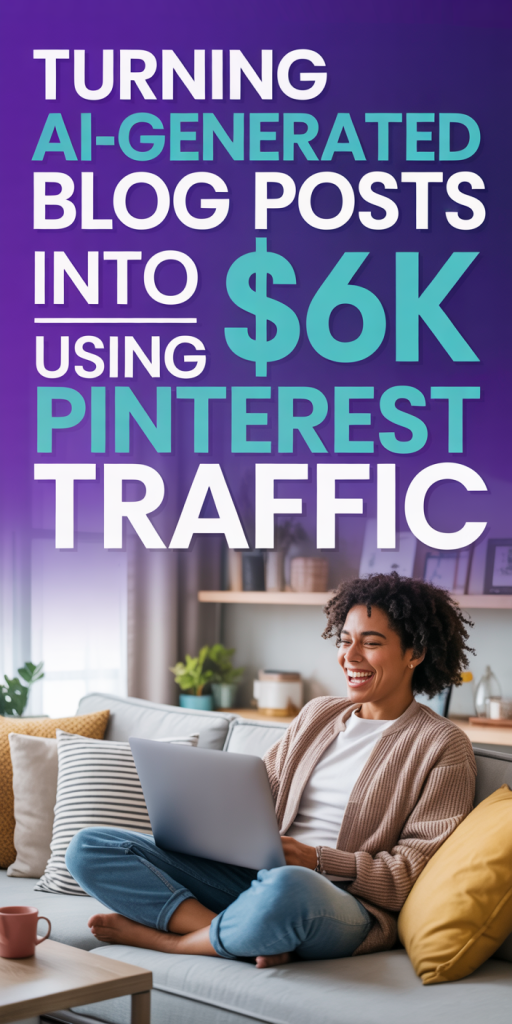
Vertical pins in a 2:3 aspect ratio with bold text overlay perform best. We make at least 4 creatives per post: two static images (different headline overlays), one design with a human photo, and one short Idea Pin (video-style) that demonstrates a quick tip. Idea Pins build awareness and feeds, static pins drive direct clicks.
Pin SEO
Pinterest’s search uses titles, descriptions, and image signals. We write pin titles that mirror how people ask questions on Pinterest and include 2–3 relevant long-tail keywords in the description naturally. We also add a short 1–2 sentence preview at the top of the article for Pinterest’s preview card, this boosts close-ups.
Scheduling & scaling
We use a scheduler (Tailwind or Pinterest’s scheduler) to space pins over time. For new posts we pin the main creative to up to 8 relevant boards in the first two weeks, then scale to niche boards and fresh creatives. We monitor “saves” and “close-ups”: pins with a high save rate are given more impressions.
Measurement and doubling down
We track UTM-tagged Pinterest campaigns in Google Analytics. Key metrics: click-through rate from Pinterest, bounce rate, pages/session, and email opt-ins. Every week we identify the top-performing pin-post combos and reallocate creative testing budget to them. That compounding focus is how modest effort turned into sizable traffic quickly.
Monetization Strategy & Revenue Breakdown
We layered monetization so the same traffic could convert multiple ways.
- Affiliate revenue: $3,250 (53%), Most of our income came from product roundups and comparison posts where readers clicked to buy gear. We prioritized high-conversion affiliate partners (free returns, cookie length, credible brands).
- Display ads: $1,460 (24%), As traffic stabilized, display ad RPMs rose. Good mobile layout and respectful ad placement kept RPMs healthy.
- Digital product / lead magnet upsell: $1,000 (16%), A $9 PDF guide and a $29 mini-course sold through our email series accounted for this chunk.
- Sponsored content / other: $400 (7%), A small sponsored placement and a couple of one-off consulting referrals.
Total: $6,110
A few practical notes on conversions: our email opt-in rate hovered around 1.8–2.2% on Pinterest traffic (mobile-first). Affiliate conversion from clicks to purchase varied by product but averaged ~1.5% across promoted items. The math: consistent Pinterest clicks + an email layer + clear affiliate CTAs = reliable scaling, not a one-hit wonder.
Conclusion
Turning AI-generated drafts into profitable posts isn’t magical, it’s methodical. We used AI to accelerate drafting, then applied human judgment to polish, structure, and monetize. Pinterest provided the distribution velocity: our job was to create content that matched intent and pins that grabbed attention. If you’re starting, pick a narrow niche, build 5–10 high-intent posts with optimized pins, and iterate fast. The first few wins compound quickly, then you scale the system.