In the ever-evolving world of online marketing, Pinterest has emerged as a powerhouse for monetization, and we’re here to share our journey of making $6,700 without the constraints of a niche authority site. If you’re skeptical about how it can be done, we understand. Join us as we reveal the strategies that enabled us to leverage the unique features of Pinterest and turn pinning into profit. From understanding the algorithm to diversifying our monetization techniques, let’s jump into the details of our successful try.
The Power of Pinterest for Monetization
Understanding Pinterest’s Unique Algorithm
Pinterest is not just a social media platform: it’s a search engine tailored for visuals. Understanding its unique algorithm is crucial for monetization. The platform rewards fresh and engaging content, showcasing pins that attract clicks and saves.
When we began, we focused on creating unique pins that resonated with current trends. Pinterest prioritizes newer content, meaning that pinning consistently and utilizing seasonal trends can drive serious traffic. The key is to research what’s trending and align our pins with that content to maximize exposure.
Why I Chose Not to Focus on a Niche Authority Site
One common belief in the blogging community is that establishing a niche authority site is essential for success. But, we opted for a versatile approach. By not being pigeonholed into a specific niche, we could experiment with different types of content and broaden our reach. This flexibility allowed us to quickly pivot and fine-tune our strategies as we learned what our audience engaged with the most.
My Strategy for Content Creation
Leveraging Eye-Catching Graphics
When creating content for Pinterest, visuals are paramount. We invested our time in designing eye-catching graphics that not only stood out but also communicated value quickly. Using tools like Canva, we crafted pins with bold colors, readable fonts, and compelling images. We found that including our branding within our graphics helped in creating a cohesive aesthetic, making our pins instantly recognizable.
Creating Engaging Pin Descriptions
The graphics capture attention, but the descriptions convert viewers into clicks. We learned to craft engaging pin descriptions that included relevant keywords without sounding forced. This combination enhanced our visibility while ensuring that our audience understood the value behind our pins. Keywords play a crucial role in how Pinterest categorizes content, so we made it a priority to incorporate them naturally into our descriptions.
Utilizing Tailwind for Scheduling and Growth
To maximize our reach without overwhelming ourselves, we utilized Tailwind to schedule posts. This tool allowed us to maintain a consistent presence on Pinterest, even during our busiest days. We harnessed its analytics to track which pins performed best, enabling us to refine our strategy and focus on what yields the highest engagement.
Building My Audience Without a Niche
Using Pinterest Groups and Communities
Engagement is key in building an audience, and Pinterest groups provided an excellent opportunity to connect with others. We joined several group boards that aligned with our interests, allowing us to share our content with a larger audience. Participating actively in these communities not only increased our visibility but also fostered relationships with other pinners, which led to additional collaboration opportunities.
Engaging with Followers and Converters
While we amassed followers, genuine engagement became our focus. We responded to comments, re-pinned others’ content, and engaged with our audience on their pins as well. This activity helped establish a sense of community, turning casual viewers into loyal followers. Also, we measured our interactions to see what resonated most, fine-tuning our approach to maximize conversion rates.
Diversifying Monetization Techniques
Affiliate Marketing on Pinterest
One of our most successful strategies involved affiliate marketing. We signed up for affiliate programs that aligned with our broad content categories, sharing links within our pin descriptions. Transparency was key: we ensured to disclose our affiliate status to build trust among our audience. This approach proved effective, as followers appreciate honesty and are more likely to convert when they feel respected.
Selling Digital Products and Courses
Plus to affiliate marketing, we ventured into creating and selling digital products, such as e-books and online courses. By leveraging our audience’s interests and pain points, we could develop products that offered genuine value. Each product launch was paired with a tailored marketing strategy on Pinterest, which resulted in significant conversion spikes.
Lessons Learned and Future Goals
Analyzing What Worked and What Didn’t
Reflecting on our journey, we found that certain strategies significantly outperformed others. Our pin designs that focused on quick tips and how-tos were consistently favored by users. In contrast, less visual content didn’t garner the same level of interest. This analysis has been instrumental in guiding our future content strategy.
Setting New Revenue Targets
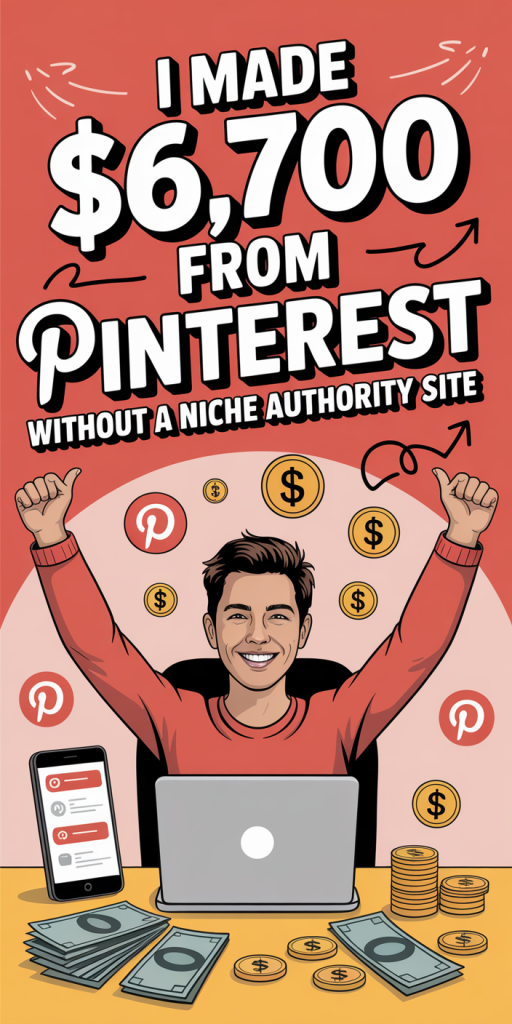
Having successfully made $6,700, our goals have evolved. We aim to double this figure in the next year, exploring new avenues to diversify our income further. Setting clear revenue targets not only motivates us but also holds us accountable as we refine our approach moving forward.
Conclusion
To conclude, our journey of making $6,700 from Pinterest without a niche authority site demonstrates that flexibility, creativity, and strategic actions are key to monetization. By understanding Pinterest’s unique algorithm, crafting engaging content, and building genuine connections, we not only generated income but also established a growing platform. If you’re looking to venture into Pinterest for profit, remember that experimentation and engagement will pave the way to success.