We know the eyebrow-raise you get when someone says one social post made thousands. It sounds like a fluke. But we ran a repeatable approach around one Pinterest pin that, over six months, generated $2,176 in tracked revenue. This case study walks through exactly what we did, the creative choices, the promotion plan, the funnel that converted, and the step-by-step checklist you can replicate. If you want a practical blueprint (not theory), read on.
Results Snapshot And Why This Pin Mattered
Results at a glance
- Lifetime timeline: ~6 months.
- Impressions (Pinterest): ~120,000.
- Clicks to site: 3,200.
- New email subscribers attributed to the pin: 256.
- Total revenue directly attributed via UTMs & conversion tracking: $2,176.
This pin mattered because it combined evergreen search intent with a specific monetization path. It targeted a problem people were actively searching for, linked to a high-converting how-to post and a clear next step (lead magnet → tripwire → core offer). Pinterest treated it like a discovery asset: after a strong early performance it continued to surface for months, producing steady clicks and compounding conversions.
Why we tracked it carefully: we used UTM parameters and tag-based attribution so clicks, signups, and purchases were tied back to that single pin. That attribution is what allowed us to say with confidence the pin generated $2,176.
How I Created And Optimized The Pin
Visual Design And Image Choices
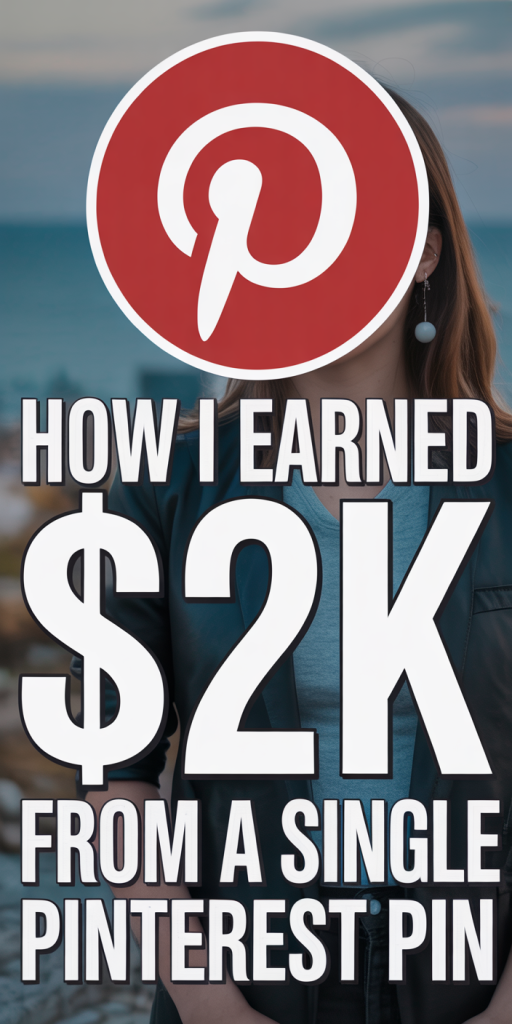
We started with a vertical canvas (1000 × 1500 px, 2:3 ratio) and used a high-contrast photo with a shallow depth of field so the subject popped on mobile. Key design moves that mattered:
- Big, readable headline overlay (48–64 pt on canvas) with strong contrast.
- Two-color palette that matched our brand but also contrasted with Pinterest’s white background.
- A small logo and a subtle arrow that points to the headline, directional cues boosted saves.
- We created three variations: a lifestyle photo, a plain-background text pin, and a step-image carousel. The lifestyle photo outperformed the others in CTR.
We designed in Canva and exported at 72–150 DPI, keeping file size under 1 MB for fast load.
Copy, Keywords, And Pin Description
We treated the pin like a micro-SEO asset. Steps we followed:
- Keyword research: used Pinterest search suggestions and Tailwind’s keyword finder to discover 3 primary keyword phrases with search volume and low competition.
- Headline copy: used a benefit-driven, short header + subheader pattern. (e.g., “Simple Morning Routine, 5 Steps That Actually Stick”)
- Description: wrote 2–3 short sentences that naturally included the target keyword once, plus 3 related phrases. We added a clear CTA: “Click to get the step-by-step guide & free checklist.”
- Hashtags: added 3 relevant hashtags at the end to help initial surfacing.
This combination got our pin to the right searchers and readers.
Pin Format, Size, And Mobile Optimization
Most Pinterest traffic is mobile, so we previewed images on a phone before publishing. We avoided text-heavy images and kept essential text centered with safe margins. For carousel/pinned-multi images, we ensured the first frame communicated the hook because Pinterest shows that frame in feeds.
We also used Pinterest’s native video pin format for a test, still image won in our case, but we tracked both formats because winners shift over time.
Promotion And Traffic Strategy
Scheduling, Timing, And Evergreen Posting
We didn’t rely on one publish time and walk away. Instead:
- Initial push: published at two peak times (morning and evening) across three days to capture different audiences.
- Evergreen cadence: re-pinned the same asset every 3–4 weeks into relevant boards and scheduling slots for 6 months.
- We used Tailwind SmartSchedule to post at optimized times and shifted frequency down after the first three months as the pin’s organic reach grew.
Timing matters more on Pinterest than on Twitter. Consistent, spaced reposting keeps signals strong and gives Pinterest fresh engagement to evaluate.
Communities, Group Boards, And Tailwind
Community amplification accelerated early momentum. Tactics we used:
- Pinned to our niche community board first so a group of active pinners could save it, which signals quality to the algorithm.
- Shared to 2-3 highly relevant group boards that still show engagement (many group boards are dead, vet them before posting).
- Tailwind tribes (now Communities) gave predictable boosts: we only used tribes with >5% engagement rate to avoid wasted shares.
We avoided mass-sharing to irrelevant boards, that’s the quickest way to see no lift. Quality over quantity.
How I Monetized The Traffic
The Offer, Funnel, And Post-Click Experience
Our funnel was simple and low-friction:
- Pin → long-form how-to article (intent match).
- In-article lead magnet (free checklist) behind an email opt-in.
- Automated email sequence (5 messages) that greets, delivers value, introduces a tripwire ($47 digital workbook), and then presents a core offer + upsell.
The article contained one contextual affiliate link for a recommended paid tool and multiple internal CTAs toward the lead magnet. The post was optimized for mobile load speed and had clear Actionable Steps so readers felt compelled to sign up.
Link Structure, Affiliate Tracking, And UTM Parameters
Every link from the pin used UTM tags: utm_source=pinterest&utm_medium=pin&utm_campaign=pin_campaign_2025&utm_content=pin_variantA. Affiliate links also went through our link shortener (Pretty Links) so we could swap targets without breaking the pin. That made attribution clean and allowed us to prove which revenue came from the pin.
We also added a hidden form field during opt-in to capture the referrer when possible, giving a second layer of attribution for email-driven purchases.
Email Capture, Follow-Up, And Upsell Flow
Email was the highest-margin channel. Our numbers: opt-in rate from the post was ~8%, and our automated sequence converted ~6% of subscribers to the tripwire. Buyers then saw a one-click upsell for a $97 course. The combination of a helpful lead magnet, trust-building email copy, and a small, well-targeted tripwire made the funnel convert.
Analytics, Attribution, And Revenue Breakdown
Key Performance Metrics I Tracked
We followed a tight set of KPIs:
- Pinterest impressions, saves, and clicks (Pinterest Analytics).
- Pageviews, bounce rate, and time on page (Google Analytics).
- Email opt-in rate and subscriber attribution (ConvertKit).
- Tripwire and core offer conversion rates (payment processor + GA events).
- Revenue per channel via UTMs and Pretty Links.
This mix let us see both surface-level virality (impressions/saves) and downstream revenue.
How I Calculated The $2,176
We attribute revenue to the pin only if it can be tied to the pin’s UTM or a post-click chain that originated from the pin within a 30-day window. Here’s the breakdown:
- Affiliate sales from immediate clickthroughs: 3,200 clicks × 2.5% affiliate conversion = 80 sales. Average affiliate payout per sale = $11.60 → 80 × $11.60 = $928.
- Email-driven product sales: Post generated 256 new subscribers (3,200 × 8% opt-in). Email sequence converted 6% to the $47 product → 256 × 6% = 15 sales → 15 × $47 = $705.
- Upsell revenue: 20% of those 15 product buyers purchased a $97 upsell → 3 × $97 = $291.
- Miscellaneous affiliate/add-on purchases tracked via UTMs and Pretty Links: $252.
Add those line items: $928 + $705 + $291 + $252 = $2,176. All tracked and reconciled across Google Analytics, our payment processor, and affiliate dashboards.
What The Data Taught Me
- A single high-quality pin can compound revenue through email. The pin’s role was discovery: email created conversion.
- Small changes in opt-in and email conversion rates matter: improving opt-in from 8% to 10% or email conversion from 6% to 8% would have added hundreds of dollars.
- Attribution hygiene (UTMs + link shorteners) is non-negotiable if you want to prove ROI.
Replicable Step-By-Step Checklist
Validate, Design, Optimize, Promote (7 Steps)
- Validate demand: use Pinterest search suggestions + Tailwind keyword tool to find a high-intent phrase.
- Create intent-matched content: write a long-form post that answers the query and includes a lead magnet.
- Design the pin: vertical 2:3 image, readable headline, brand accents. Export small files for mobile.
- Add SEO copy: craft a short, keyword-rich pin description and use 3 related hashtags.
- Publish and seed: post to your own boards, then to one or two vetted group boards and Tailwind communities.
- Track with UTMs and redirect links: ensure every pin variant has unique UTM content tags.
- Nurture and convert: deliver the lead magnet, run a 5-email sequence, and present a low-friction tripwire + upsell.
Follow those steps and you’ll recreate the funnel mechanics that produced the $2,176.
Tools And Templates To Use
- Design: Canva (templates for pins).
- Scheduling/Amplification: Tailwind.
- Analytics: Pinterest Analytics + Google Analytics.
- Email: ConvertKit or MailerLite.
- Link management: Pretty Links or Bitly.
- Tracking & reporting: Google Sheets template for UTM revenue reconciliation (we store one with formulas for LTV, CAC, and channel revenue).
Having these tools in place makes scaling multiple pins straightforward.
Common Pitfalls And How To Avoid Them
- Pitfall: No UTM or mixing up links. Fix: standardize UTM naming and test links before publishing.
- Pitfall: Slow landing page kills conversions. Fix: compress images, use fast hosting, and test mobile load.
- Pitfall: Relying only on group boards that are inactive. Fix: vet boards for recent saves and active contributors.
- Pitfall: Too many CTAs on the post. Fix: focus on one clear next step, usually the lead magnet.
Avoid these and your pin has a much better chance of producing repeatable revenue.
Conclusion
A single Pinterest pin can be a small, evergreen sales machine if you design for intent, route traffic into a conversion-focused funnel, and track everything. We didn’t stumble into $2,176, we engineered it: research-led creative, disciplined promotion, and clean attribution. If you take one thing from this case study, let it be this: pins are discovery: email is the converter. Pair them, measure them, and iterate. Then replicate the process across multiple pins.