Building a substantial email list can feel like an uphill battle, but what if we told you that we achieved a $5,000 monthly revenue from our list in just 90 days, largely thanks to Pinterest? In this text, we’ll break down the strategies that helped us leverage Pinterest for email marketing, sharing actionable insights along the way. Whether you’re just starting out or looking to enhance your existing strategy, our experience could provide you with the roadmap you need.
Understanding the Potential of Pinterest for Email Marketing
Why Choose Pinterest for Building Your Email List?
Pinterest isn’t just a platform for sharing creative recipes or DIY projects: it’s a powerful search engine with over 450 million users. Unlike other social media networks, its users often come with a specific intent, seeking inspiration and solutions. This intent makes Pinterest an ideal platform for capturing leads who are genuinely interested in what we have to offer. We harnessed this power by creating visually appealing pins that resonated with users seeking our expertise.
Identifying Your Target Audience on Pinterest
To effectively use Pinterest, we first needed to identify our target audience. This involved researching popular trends in our niche and understanding what types of content our potential subscribers were pinning and saving. By analyzing boards related to our industry and engaging with these communities, we built a clearer picture of whom we were aiming to attract.
Setting Up Your Pinterest Profile for Success
Our Pinterest profile serves as the gateway to our email list, so we invested time into ensuring it was optimized. We made sure to use a recognizable logo and a succinct, keyword-rich bio that reflected our brand. Adding a link to our website and ensuring we had a strong call to action to subscribe to our email list helped maximize conversions from our profile. Also, we utilized a business account, giving us access to analytics and promotional tools that proved invaluable.
Creating Compelling Content That Converts
Developing a Consistent Pinterest Pinning Strategy
Creating visually appealing pins was just the beginning. We developed a consistent pinning strategy that included scheduling several pins per day. Using tools like Tailwind, we automated our posting while maintaining consistent engagement. We experimented with various designs, colors, and calls to action to see what resonated best with our audience.
Utilizing Pinterest SEO for Greater Reach
To improve our discoverability, we focused on Pinterest SEO. This entailed using keywords effectively in our pin descriptions, board titles, and profile bios. We also aligned our content with trending searches on Pinterest, giving us a competitive edge. Regularly updating our boards with fresh content kept our pins circulating and led to increased visibility.
Leveraging Pinterest Analytics to Optimize Performance
Monitoring our performance through Pinterest Analytics became paramount. We tracked metrics such as impressions, clicks, and saves to understand which pins were driving the most traffic to our landing pages. This data allowed us to tweak our strategies, emphasizing what worked and discarding what didn’t. A/B testing different designs and calls to action also helped us refine our approach and elevate our conversion rates.
Engaging with Your Audience and Building Relationships
Transforming Visitors into Subscribers
Building an email list is more than just getting people to sign up: it’s about nurturing those relationships. We engaged with our followers by responding to comments and messages, driving discussions on our boards, and encouraging feedback on our content. By offering exclusive resources such as free guides or templates in exchange for email sign-ups, we turned casual visitors into loyal subscribers.
Measuring Success and Adjusting Strategies
To ensure our growth was sustainable, we continuously measured our success through key performance indicators (KPIs) such as subscriber growth rate, open rates, and click-through rates on our emails. We regularly adjusted our strategies based on these metrics, continually optimizing our email content and our Pinterest approach. This proactive stance enabled us to adapt to changing trends and maximize our revenue.
Conclusion
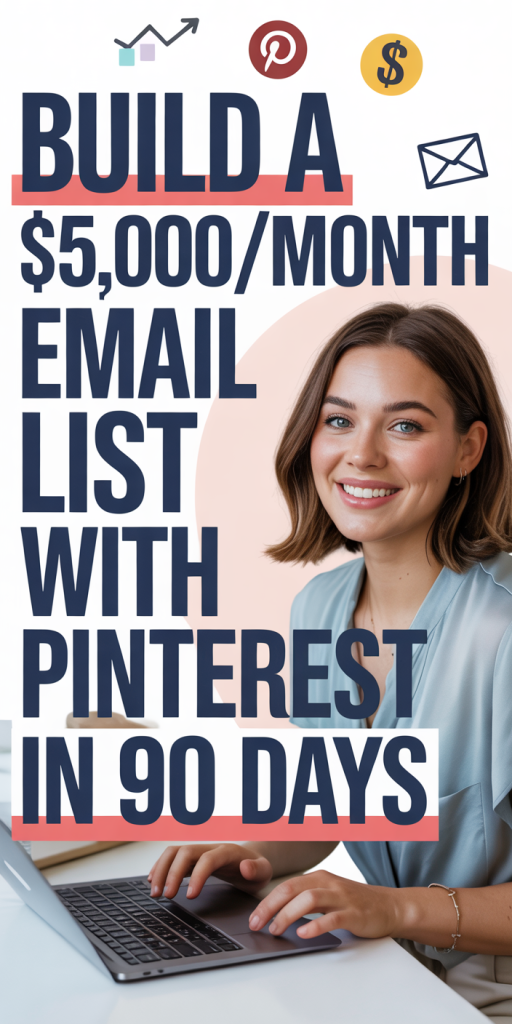
Building a $5,000/month email list through Pinterest in just 90 days wasn’t merely luck, it was the result of strategic planning, consistent effort, and a keen understanding of our audience. By leveraging Pinterest’s unique platform and adhering to best practices in content creation and analytics, we laid a strong foundation for our email marketing efforts. For anyone looking to expand their own email list, we hope our experiences serve as a source of inspiration and practical guidance.