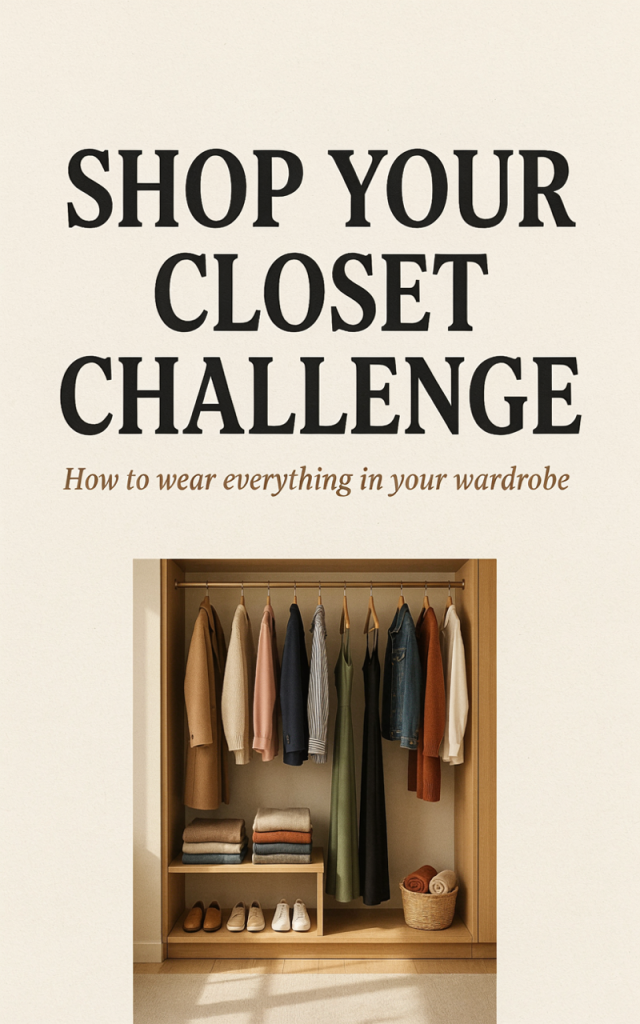
Get ready to rediscover your wardrobe. The Shop Your Closet Challenge helps you wear everything you already own by turning familiar pieces into fresh, confident outfits. This guide breaks the process into simple, realistic strategies you can do between school runs, nap times, or during quiet moments—no shopping required.
1) Build a Capsule Wardrobe for the Week
Description
A capsule-week approach means choosing a small set of versatile pieces that mix and match across seven days. This reduces decision fatigue and forces creative pairings so every item gets used.
Practical setup steps
– Pull everything out and sort into categories: tops, bottoms, dresses, outerwear, shoes, accessories.
– Pick 8–12 core pieces (neutral pants/skirts, 2-3 tops, one dress, light jacket) and 4 accent items (patterned top, colorful scarf, statement necklace).
– Plan 7 outfits on a whiteboard or in your phone for the week—rotate one accent item each day.
– Photograph each outfit so you have a visual outfit diary for future weeks.
– Tweak next week by swapping one or two items to keep things fresh.
Estimated startup costs
$0–$30 (use items you already own; optional buy of a storage box or basic hanger set).
2) Smart Color Palette Editing
Description
Limit your wardrobe to 2–3 core colors plus 1–2 accent shades. When everything shares a palette, mixing is effortless and pieces appear more wearable.
Practical setup steps
– Lay out clothes and group by color families.
– Choose a core palette that flatters your skin tone (e.g., navy, camel, cream) and one accent (e.g., mustard, teal).
– Donate or box items that clash with your chosen palette.
– Make one “swap bag” for seasonal color experiments.
Estimated startup costs
$0–$20 (optional color swatches or a basic color wheel).
3) Accessory Power-Ups
Description
Accessories transform basics into looks. A single scarf, belt, or pair of earrings can create multiple new outfits from the same pieces.
Practical setup steps
– Inventory accessories and separate into everyday vs. statement piles.
– Choose three go-to accessory combos (e.g., belt + boot, scarf + blazer, layered necklaces + tee).
– Practice swapping accessories with 5 outfits to see immediate differences.
– Store accessories where you dress so swapping becomes habitual.
Estimated startup costs
$0–$50 (use existing items; inexpensive accessories from thrift stores perform well).
4) Master Layering Techniques
Description
Layering changes the silhouette and function of garments—tank tops become blouses, skirts become warm winter outfits, and dresses can serve as tops.
Practical setup steps
– Test combinations: dress + slim sweater, skirt + longline cardigan, shirt + slip dress.
– Use belts to redefine waistlines over layers.
– Mix textures (knit over silk, denim with lace) for visual interest.
– Keep a layering cheat-sheet (photo examples) near your closet.
Estimated startup costs
$0–$40 (optional camisoles or thin knit layers).
5) Outfit Formulas You Can Copy
Description
Create reproducible formulas—reliable templates that always work. Formulas reduce decision time and ensure every piece is wearable.
Practical setup steps
– Pick 6 formulas (e.g., blazer + tee + jeans; midi skirt + sweater + ankle boots; dress + cardigan + belt).
– Build each formula with items from your closet and photograph them.
– Rotate formulas so each week uses different base pieces.
– Store formulas in a notes app or printed card in the closet.
Estimated startup costs
$0.
6) Repair, Alter, Upcycle
Description
Small fixes make unworn items usable again. Hem adjustments, replacing buttons, or a simple tailoring tweak can convert “almost” pieces into favorites.
Practical setup steps
– Identify items with small issues: loose buttons, runs, too-long hems.
– Learn basic mending (hand-sewing, quick hemming) or schedule a local tailor session.
– Try simple upcycles: turn an oversized shirt into a tied-front top or dye a faded piece.
– Keep a mending kit in your laundry area.
Estimated startup costs
$5–$60 (thread/needles, basic sewing kit, or a low-cost tailor visit).
7) Turn Your Closet into Extra Income
Description
If an item still never sees the light of day, reselling or repurposing it can be a smart step—turn clutter into cash or trade for something you’ll wear.
Practical setup steps
– Photograph items clearly and write honest descriptions.
– Choose platforms: direct resale apps, marketplaces, or freelance help for listings (if you prefer hands-off).
– If you’d like to promote listings or blog about your journey, consider starting a blog (step-by-step guide) and secure website hosting (WPX).
– Use Pinterest (for outfit traffic) as a free visual driver for listings or blog posts.
– Automate promotions with a social media scheduling (tool) service to post listings at peak times.
– Build simple funnels for repeat buyers using sales funnels (HighLevel) if you scale.
– Hire listing help or product photographers on Upwork (freelance marketplace) or Fiverr (quick gigs).
– If you need small supplemental income while organizing, try paid surveys (quick income options).
Estimated startup costs
$0–$100 (listing fees, shipping supplies, optional paid help from freelancers).
Every mom’s wardrobe and energy level is different—pick one strategy to try this week, and build momentum by photographing wins. Small weekly habits will let you wear more of what you love while saving time, stress, and money.