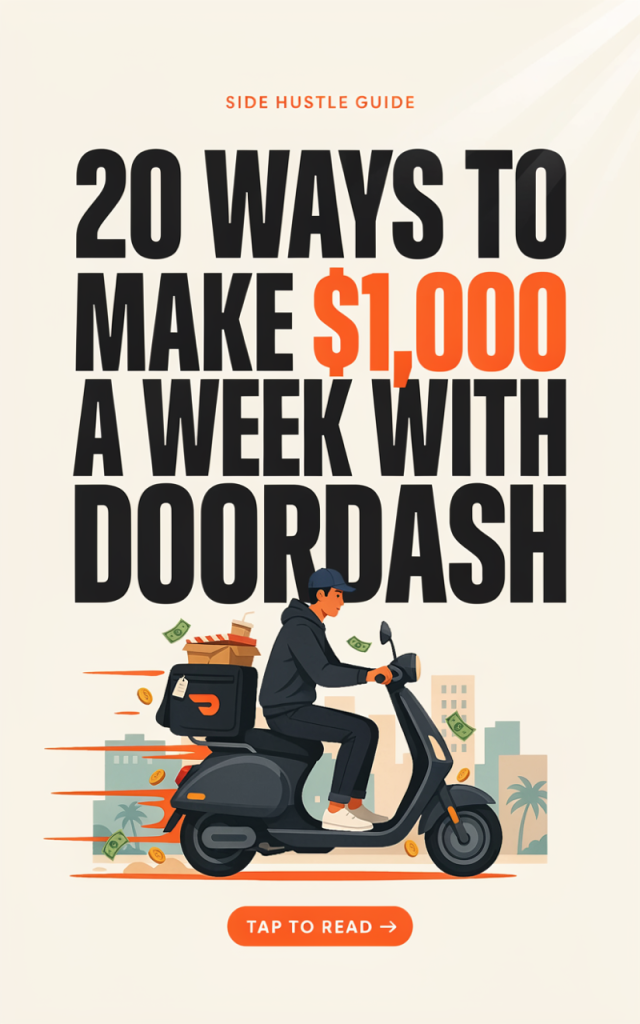
DoorDash can be a flexible, profitable way for stay-at-home moms to earn real money on a schedule that fits family life. Whether you want to be on the road several hours a day or combine a few smart online income streams with the hours you deliver, these 20 practical strategies will help you aim for $1,000 a week — with step-by-step setup tips and realistic startup cost estimates.
1. Run High-Efficiency DoorDash Shifts (Optimize Peak Pay)
Description: Focused, high-efficiency shifts during lunch, dinner, and weekend brunch can dramatically increase your per-hour earnings. Combine stacked incentives, block scheduling, and acceptance strategies to maximize payout per hour.
Practical setup steps:
– Study your local hotspots (malls, business districts, university areas) and map them.
– Use DoorDash scheduling to claim peak blocks; accept stacked/peak orders selectively.
– Track acceptance rate vs. payout to find the best balance between batching and customer satisfaction.
– Keep delivery essentials in your car (insulated bag, phone mount, charger) to reduce downtime.
Estimated startup costs: $50–$200 (hot bag ~$40–$100, phone mount ~$10–$20, charger ~$10–$30)
2. Stack Delivery Apps (DoorDash + Others)
Description: Deliver for DoorDash and one or two other apps (Uber Eats, Grubhub) to always have high-paying orders. Switching between apps keeps you busy and lets you accept the best offers.
Practical setup steps:
– Sign up and keep all apps logged in but only accept from the highest-paying queue.
– Disable notifications on lower-paying apps when you’re in a high-paying DoorDash zone.
– Track mileage and payments daily to determine which apps are most profitable for your area.
Estimated startup costs: $0–$50 (mostly phone data and mount)
3. Target Catering & Corporate Orders
Description: Catering and corporate orders pay more per stop and often tip better. They can be a reliable way to push weekly earnings into the $1,000 range.
Practical setup steps:
– Contact local businesses and restaurants to offer delivery availability for catering windows.
– Position yourself near downtown office parks or event venues during lunch and conference times.
– Use a reliable cooler/insulated containers for large orders to ensure quality.
Estimated startup costs: $50–$300 (large insulated containers/coolers)
4. Offer Pre-Shop and Personal Shopping Services
Description: Some customers want pre-shop (you buy groceries and deliver). Advertise a premium pre-shop + delivery service at a fixed fee plus tips.
Practical setup steps:
– Create a simple pricing sheet (base fee + per-item markup or flat shopping fee).
– Promote via local community groups, the DoorDash customer notes, or a small flyer at local stores.
– Keep receipts and a simple app for expense tracking.
Estimated startup costs: $0–$50 (printed flyers or simple ad spend)
5. White-Glove Delivery (Door-to-Door Setup)
Description: Offer a white-glove option — carrying groceries inside, placing items on counters, or helping set up platters for events. Charge a premium for this extra service.
Practical setup steps:
– Decide clear boundaries (how many flights of stairs, handling fragile items).
– Add this service to your delivery notes and advertise it on neighborhood apps.
– Pack sanitizing wipes and gloves to appear professional and safe.
Estimated startup costs: $10–$50 (gloves, wipes, small utility items)
6. Launch a Local Subscription Meal Delivery
Description: Create a weekly subscription meal drop for busy families using DoorDash for fulfillment. Subscribers pay a weekly fee; you prepare or source meals and DoorDash handles delivery.
Practical setup steps:
– Test with a small group (5–10 families) to calibrate menu, price, and delivery windows.
– Set an ordering cutoff time and use DoorDash scheduling to align pickups.
– Handle orders through a simple payment system (Venmo, PayPal) and keep clear records.
Estimated startup costs: $100–$500 (initial food supplies, packaging, marketing)
7. Use Referrals to Boost Income
Description: DoorDash and other delivery platforms often have driver referral bonuses. Recruit friends or network within local parent groups to pick up referral payouts.
Practical setup steps:
– Learn the current referral terms in your area and share your referral link with clear instructions.
– Host a short virtual Q&A for interested moms to explain how to sign up and maximize their first weeks.
– Track who signs up through your link to make sure you get credited.
Estimated startup costs: $0
8. Offer Route Optimization & Scheduling to Other Dashers
Description: If you’ve mastered hotspots and peak times, offer short consulting sessions to new drivers on how to schedule and route for maximum earnings.
Practical setup steps:
– Create a 30–60 minute consulting outline covering hotspots, app strategies, and time management.
– List your service on platforms like Upwork and Fiverr.
– Offer a recorded version or downloadable route map as an upsell.
Estimated startup costs: $0–$50 (microphone or basic recording tools)
9. Manage a Small Fleet (Hire Drivers)
Description: Scale by hiring other drivers to fulfill your bookings or local contracts — you coordinate, and take a cut of earnings.
Practical setup steps:
– Start with 1–2 reliable drivers and use simple scheduling apps to dispatch.
– Create a clear contract for payment splits and responsibilities.
– Use feedback and metrics to optimize which drivers thrive in which zones.
Estimated startup costs: $200–$1,000 (background checks, basic management tools)
10. Start a DoorDash Blog to Share Tips (and Monetize)
Description: Build helpful content around DoorDash strategies, tips, and earning reports. Monetize with ads, affiliate links, and digital products.
Practical setup steps:
– Begin starting a blog focused on DoorDash earnings, local tips, and mom-friendly schedules.
– Choose reliable website hosting, set up a simple theme, and publish consistently.
– Promote posts on social media and in local groups to grow readership.
Estimated startup costs: $20–$150 (domain name, website hosting, theme)
11. Promote Your Blog with Pinterest
Description: Pinterest drives massive traffic to blogs — use it to funnel readers to your DoorDash guides and product offers.
Practical setup steps:
– Create pinnable graphics for each blog post and publish regularly to your boards.
– Use keyword-rich descriptions and join group boards or Tailwind communities.
– Track which pins bring the most clicks and double down on those topics.
Estimated startup costs: $0–$20/month (optional scheduling tool or promoted pins)
Learn more about leveraging Pinterest for traffic.
12. Package a DoorDash Course and Use a Sales Funnel
Description: Teach other moms your DoorDash system — sell a course or coaching program using automated sales funnels to scale.
Practical setup steps:
– Outline course modules (scheduling, hotspots, customer service, taxes).
– Record short, clear lessons and create downloadable templates.
– Build a simple sales funnel or use a landing page system to sell and automate onboarding.
Estimated startup costs: $100–$1,000 (course hosting, basic recording, funnel tool)
13. Sell DoorDash Tools or Printables on Etsy
Description: Create useful printables — tip trackers, mileage logs, scheduling templates — and sell them as digital downloads.
Practical setup steps:
– Design templates in Canva or Google Docs.
– Open an Etsy shop and list your digital files with strong keywords.
– Promote on your blog, Pinterest, or local groups.
Estimated startup costs: $0–$50 (Canva Pro optional, Etsy listing fees)
14. Offer Social Media Management for Local Restaurants
Description: Many small restaurants need help with social content and promotions — you can provide management in downtime and schedule posts with a social media scheduling tool.
Practical setup steps:
– Create a simple menu of services (3 posts/week, review monitoring, basic ads).
– Use a social media scheduling tool to batch tasks on slow delivery days.
– Offer a demo month at a discount to win your first clients.
Estimated startup costs: $0–$50/month (scheduling tool, basic design templates)
15. Offer Virtual Admin or Order Management via Upwork/Fiverr
Description: Restaurants and small businesses hire virtual help to manage online orders and menus. List your services on Upwork and Fiverr.
Practical setup steps:
– Create clear gig descriptions: menu updates, order monitoring, customer messages.
– Offer packages (basic, standard, premium) and request testimonials.
– Use downtime between deliveries to complete client work.
Estimated startup costs: $0–$50 (profile photos, small ad spend)
16. Create a YouTube Channel or Podcast About DoorDashing
Description: Share your delivery day routines, earnings reports, and tips. Monetize with ads, sponsorships, and affiliate links.
Practical setup steps:
– Start with short, consistent videos (10–15 minutes) that show real shifts and tips.
– Reinforce credibility with screenshots of earnings (blurring personal info).
– Cross-promote on your blog and Pinterest for discoverability.
Estimated startup costs: $50–$300 (basic camera/mic if needed)
17. Sell Meal Kits or Party Platters and Deliver via DoorDash
Description: Partner with a local caterer or prepare small batches at home (where allowed) and use DoorDash for delivery. Higher per-order revenue helps hit $1,000/wk faster.
Practical setup steps:
– Verify local food laws for home-prepared foods.
– Start with weekend bundles for 5–10 customers to test demand.
– Use DoorDash for delivery scheduling and charge a premium for convenience.
Estimated startup costs: $100–$500 (ingredients, packaging, permits)
18. Earn Extra During Downtime with Surveys
Description: Fill short surveys or microtasks between shifts to add consistent pocket money.
Practical setup steps:
– Save reputable survey apps/sites to your phone for short gaps.
– Use this for quick cash to cover gas or small weekly goals.
– Track time vs. payout to ensure surveys fit your schedule.
Estimated startup costs: $0
19. Create and Sell a DoorDash Earnings Spreadsheet or Planner
Description: Build a spreadsheet that helps drivers track earnings, taxes, mileage, and tips. Sell it as a downloadable or include it with your consulting gigs.
Practical setup steps:
– Design a clear, easy-to-use spreadsheet (monthly and weekly tabs).
– Offer a free version to collect emails and a premium version for sale.
– Bundle with a short guide or video for added value.
Estimated startup costs: $0–$25 (software tools or template marketplace fees)
20. Build a Full Online Business Around Your Dash Experience (Blog + Funnels)
Description: Combine a blog, Pinterest traffic, and a product funnel to create recurring income that complements DoorDash. Use a sales funnel to sell guides, courses, or coaching and drive higher, passive earnings.
Practical setup steps:
– Start by starting a blog and pick a niche: DoorDash tips for moms, gig economy bookkeeping, or family-friendly schedules.
– Set up reliable website hosting, create lead magnets, and push traffic from Pinterest.
– Build a compact sales funnel to convert readers into buyers and use email automation to increase customer value.
Estimated startup costs: $50–$300 (hosting, basic funnel tool, initial marketing)
No single path guarantees $1,000 each week overnight, but combining a few of these strategies — optimized DoorDash shifts, catering or subscription services, plus one or two online income channels — can get you there. Start with the low-cost, high-impact moves (shift optimization, multi-app stacking, and referrals), test a paid idea (catering, subscription meals, or a small course), and scale the ones that bring reliable returns. You’ve got this — flexible work, predictable income, and more control over your schedule are within reach.