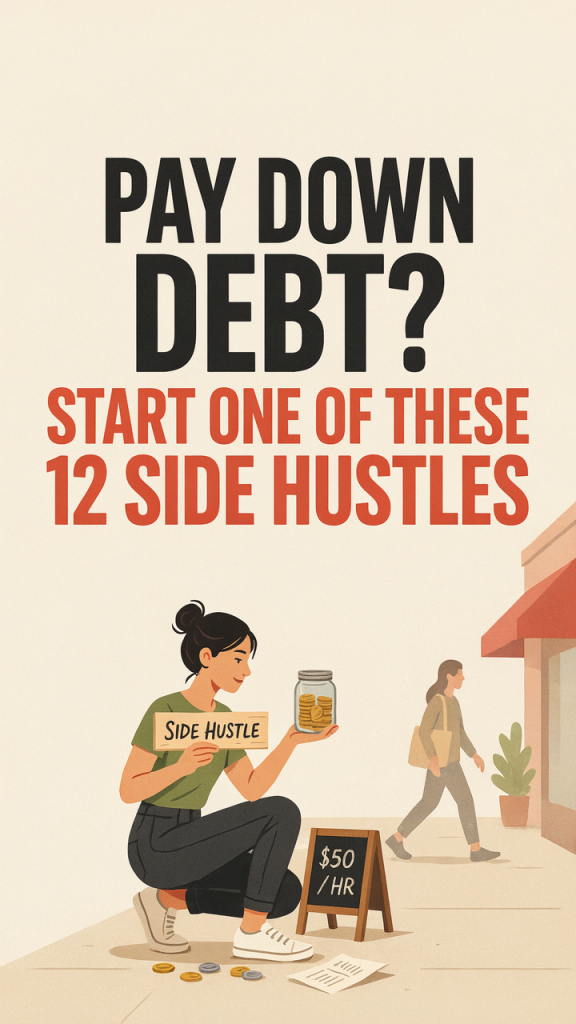
Feeling overwhelmed by mounting bills and credit card statements? You’re not alone — many people find themselves looking for practical ways to free up cash and accelerate debt repayment. Starting a side hustle can be one of the fastest, most flexible ways to bring in extra income and regain control of your finances.
Below are 12 realistic side hustles you can start while juggling family, a current job, or other commitments. For each idea I’ll explain what it is, how to get started step-by-step, and the estimated startup costs so you can pick what fits your life and budget.
1. Freelance Writing or Content Creation
Description: Write blog posts, articles, email copy, or product descriptions for businesses and bloggers who need content but don’t have time to create it themselves. Demand for quality content is steady, and assignments can fit around school schedules or other commitments.
How to get started:
– Choose a niche you know (parenting, finance, health, home, lifestyle).
– Create a simple portfolio (a free Medium profile or a small WordPress site).
– Pitch to blogs, content marketplaces (Upwork, Fiverr, ProBlogger), or local businesses.
– Set rates per piece or per hour and collect testimonials to raise prices over time.
Estimated startup costs: $0–$100 (domain/hosting optional). You can start for free using platforms like Medium, Contently, or free Upwork accounts.
2. Virtual Assistant (VA)
Description: VAs handle administrative tasks like email triage, scheduling, data entry, social media posting, and customer support. Many entrepreneurs and small businesses outsource these tasks to save time.
How to get started:
– List the tasks you can do (email, calendar, Pinterest management, bookkeeping basics).
– Create a simple service page or LinkedIn profile describing packages (hourly or retainer).
– Join VA Facebook groups and freelance platforms to find clients.
– Offer a discounted trial package to land your first client and gather reviews.
Estimated startup costs: $0–$200 (computer and internet assumed; optional course or scheduling tools).
3. Online Tutoring or Teaching
Description: Teach school subjects, test prep, language lessons, or music lessons via Zoom or specialized platforms. Tutoring is especially flexible and pays well for qualified tutors.
How to get started:
– Identify subjects you can teach confidently (math, reading, ESL).
– Sign up on platforms like VIPKid, Wyzant, Tutor.com, or advertise locally/through Facebook parenting groups.
– Prepare lesson plans and set your availability. Start with trial sessions to build positive reviews.
Estimated startup costs: $0–$100 (webcam/headset if needed; optional background materials).
4. Babysitting or In-Home Childcare
Description: Provide occasional babysitting, date-night childcare, or part-time in-home care for local families. For stay-at-home moms, this can be a natural fit if you enjoy kids and already have a safe space.
How to get started:
– Get basic certifications (CPR/First Aid) — many parents look for this.
– List services on Care.com, Sittercity, Nextdoor, or neighborhood Facebook groups.
– Offer a meet-and-greet and ask for references when starting.
Estimated startup costs: $20–$100 (CPR class, background check fees).
5. Pet Sitting, Dog Walking, or Pet Care
Description: Care for pets while owners are at work or on vacation. Dog walking and pet sitting are flexible and usually pay well in neighborhoods with many pet owners.
How to get started:
– Create a profile on Rover, Wag, or advertise locally.
– Offer introductory rates and gather testimonials/photos.
– Consider basic pet first aid training to stand out.
Estimated startup costs: $0–$50 (marketing and optional pet-first-aid class).
6. Sell Handmade Goods on Etsy or Local Markets
Description: If you craft jewelry, knit, sew, or create home décor, sell your items through Etsy, local craft fairs, or Instagram. Handmade products can command healthy margins if marketed well.
How to get started:
– Choose 3–5 products to start and perfect them.
– Open an Etsy shop and take clean photos of your items.
– Price to include materials, time, and fees. Promote via social media and local markets.
Estimated startup costs: $50–$300 (materials, Etsy listing fees, basic packaging).
7. Reselling (Thrift Flips, Consignment, Poshmark)
Description: Buy under-priced items from thrift stores, garage sales, or clearance racks and resell them online for a profit. Clothing, vintage items, books, and home goods can yield quick returns.
How to get started:
– Research what sells well (brands, styles) using eBay/Poshmark searches.
– Start small: buy a few items, clean them, take good photos, and list them.
– Reinvest profits to scale up inventory slowly.
Estimated startup costs: $50–$200 (initial inventory and shipping supplies).
8. Rent Out a Room, Garage, or Storage Space
Description: If you have extra space, rent a spare room on Airbnb, list your garage/storage on Neighbor, or rent out parking space. Passive income from space can significantly boost debt payments.
How to get started:
– Decide what space you can spare and how often it’s available.
– Create a listing on Airbnb (for rooms) or storage platforms (Neighbor).
– Prepare the space with basic cleaning and safety items; be clear about rules.
Estimated startup costs: $0–$200 (cleaning, minor supplies, photography).
9. Delivery or Rideshare (DoorDash, Instacart, Uber)
Description: Deliver food, groceries, or drive passengers during hours that fit your schedule (weekends, evenings, school drop-off time). You’ll get paid per delivery or ride plus tips.
How to get started:
– Check city eligibility and vehicle requirements for DoorDash, Uber, Instacart, etc.
– Sign up, complete background checks, and learn the app.
– Start with short shifts to learn hotspots and peak times.
Estimated startup costs: $0–$500 (gas, insurance considerations; some platforms require a smartphone with data).
10. Microtasks and Online Surveys
Description: Earn small amounts completing microtasks (data labeling, short surveys, app testing) on platforms such as Amazon Mechanical Turk, Swagbucks, or Clickworker. This won’t replace full-time income but is convenient for very flexible earnings.
How to get started:
– Create accounts on reputable microtask platforms.
– Set a time limit (e.g., 30 minutes/day) to avoid wasting time on low-pay tasks.
– Prioritize higher-paying tasks and refer friends for bonuses when available.
Estimated startup costs: $0 (just time and internet).
11. Create and Sell Digital Products or Printables
Description: Design planners, budgeting spreadsheets, e-books, printables, or templates and sell them on Etsy or Gumroad. Once created, digital products sell repeatedly without ongoing inventory costs.
How to get started:
– Identify a problem your audience has (budget trackers for debt paydown, meal planners).
– Create a polished product using Canva, Google Sheets, or design software.
– List on Etsy, Gumroad, or your own site and promote via Pinterest or social media.
Estimated startup costs: $0–$50 (Canva free version is often enough; optional premium assets).
12. Social Media Management or Simple Graphic Design
Description: Small businesses often need help posting on social media, creating basic graphics, and engaging with followers. If you’re comfortable with Instagram, Facebook, or Canva, you can manage accounts and improve local businesses’ online presence.
How to get started:
– Compile before/after social media samples (even mock posts) to show potential clients.
– Offer a low-cost starter package (10 posts/month) to your first few clients.
– Use scheduling tools (Buffer, Later) to save time and deliver results consistently.
Estimated startup costs: $0–$100 (optional scheduling tool subscription, Canva Pro if desired).
Conclusion — Pick one, start small, and apply every dollar to debt
You don’t have to overhaul your life to make meaningful progress on debt. Pick one side hustle that fits your schedule and strengths, commit a few hours a week, and funnel the extra income directly to your highest-interest debt. Small, consistent wins compound: $200–$400 a month from a side hustle can speed up repayment by months or even years.
Ready to start? Choose one idea from this list, set a 30-day action plan (one small goal per week), and track your earnings. If you want ongoing tips, real-life case studies, and templates for turning side income into debt repayment power, subscribe to Blogging With Funnels and start your debt-free journey today. You’ve got this — one small hustle at a time.