In the vast landscape of digital marketing, Pinterest often gets overshadowed by other platforms like Instagram and Facebook. Yet, this visual discovery engine has immense potential for generating income if approached strategically. We want to share our experience of how we turned Pinterest into a money-making machine without relying on traditional SEO traffic. Let’s jump into how we did it.
Understanding Pinterest as a Platform
The Power of Visual Content
Pinterest is fundamentally a visual platform, thriving on eye-catching images and engaging graphics. With over 400 million monthly users, it serves as a digital mood board where ideas come to life. The key to success on Pinterest is recognizing that it’s not just about posting pretty pictures: it’s about creating content that resonates, inspires, and encourages users to act.
When we leveraged the power of visual content, we improved our engagement significantly, leading to more clicks and eventually sales. High-quality images, infographics, and videos have proven to be the backbone of a successful Pinterest strategy.
Identifying Your Target Audience
Understanding who our audience is essential for tailoring our content effectively on Pinterest. We took the time to research and analyze demographics, interests, and behaviors of our target market. This insight allows us to create tailored pins that appeal directly to our audience’s interests.
Utilizing Pinterest’s “Trends” tool and Google Analytics gave us a clearer picture of what our audience was looking for. With that information, we set out to create pins that would capture their attention and meet their needs.
Ready to build a more flexible income stream?
Creating Compelling Pins
Design Techniques That Work
Creating visually appealing pins is an art. We found that certain design techniques consistently led to better engagement. Here are a few that worked for us:
- Consistent Branding: Using the same colors, fonts, and styles helps identify our brand quickly. This subtle form of branding builds trust and recognition.
- Use of Text Overlay: Adding engaging text over images helps convey the message of the pin at a glance. The key is to keep it concise and impactful.
- Vertical Format: Taller images tend to perform better on Pinterest, taking up more screen space and capturing the audience’s attention.
By focusing on these design strategies, we learned that compelling visuals paired with strategic placement can greatly improve our click-through rates.
Writing Engaging Descriptions
Once we had our stunning visuals, the next step was writing descriptions that drew users in. We focused on several important aspects:
- Keywords: Including relevant keywords helped our pins appear in search results. But, we ensured that they fit naturally within our writing.
- Call-to-Action: Instructions like “Click to learn more” or “Discover now.” compel users to engage with our pins and visit our website.
- Storytelling: We infused personality into our descriptions, allowing users to connect emotionally with our content. A little storytelling can go a long way in making our pins memorable.
Leveraging Group Boards and Communities
Collaborating with Influencers
Collaboration is at the heart of Pinterest success. We sought out influencers within our niche, who already had established audiences. By working together, we were able to tap into their followers and gain exposure for our content. Collaborative boards where multiple users pin can help expand our reach significantly.
We contacted influencers for co-hosting Pinterest boards, sharing our respective expertise, and building authority in our niche. This strategy not only increased followers but also drove more traffic to our pins.
Joining Niche-Specific Groups
Being part of niche-specific group boards also proved beneficial. We joined several established group boards related to our market, which allowed our pins to be seen alongside other reputable brands. This practice boosted our visibility and engagement rates.
Also, we actively participated in community discussions, offered value, and formed relationships, which helped us embed ourselves within these groups, amplifying our reach even further.
Monetization Strategies on Pinterest
Promoting Affiliate Products
One of our primary revenue streams came from affiliate marketing. We integrated affiliate links into our pin descriptions for relevant products that our audience would find valuable. We made sure to disclose that these were affiliate links, maintaining transparency and trust with our audience.
To maximize success, we selected well-known affiliate programs that offered quality products and services. When our audience clicked through using our pins and made purchases, we earned a commission, this small effort turned into sizable gains.
Creating and Selling Digital Products
Beyond affiliate marketing, we created and sold our own digital products. Whether it was eBooks, online courses, or printables, Pinterest became our top-of-funnel traffic source. We showcased these products through customized pins, leading users to our website where they could make purchases.
We focused on ensuring that our digital products aligned perfectly with our audience’s interests, solving problems or providing value, which led to an increase in sales.
Utilizing Email Marketing with Pinterest
Building a Strong Email List
An engaged email list is a marketer’s goldmine. We implemented strategies directed at converting Pinterest traffic into subscribers. Offering freebie material, such as templates or guides in exchange for email addresses, proved effective. Our pins linked to landing pages where visitors could sign up easily.
By using Pinterest to drive traffic to our email opt-in forms, we successfully grew our list with targeted leads interested in our niche.
Crafting Email Campaigns with Pins
Once we built our email list, we began crafting campaigns that directed subscribers back to our Pinterest content. Each email included pins directing recipients to our latest products, blog posts, or exciting deals. This method kept our audience engaged and informed while reinforcing our brand’s presence.
Analyzing Performance and Adjusting Strategies
Monitoring Engagement Metrics
To ensure our strategies were effective, we closely monitored our Pinterest analytics. Engagement metrics such as saves, clicks, and impressions helped us understand what type of content resonated with our audience.
We discovered that certain pin designs and topics outperformed others, allowing us to make data-driven decisions moving forward. Consistently checking metrics guided us to adjust our strategies as needed rather than waiting until a campaign was over.
Tweaking Your Approach for Better Results
Using the insights gained from our analytical efforts, we frequently tested new types of content and pin designs. Changes could be as small as adjusting colors or as significant as altering content focus. Every detail counted in our pursuit of higher engagement and conversions.
This commitment to refining our approach paid off, ensuring that we stayed ahead of the curve in a competitive landscape.
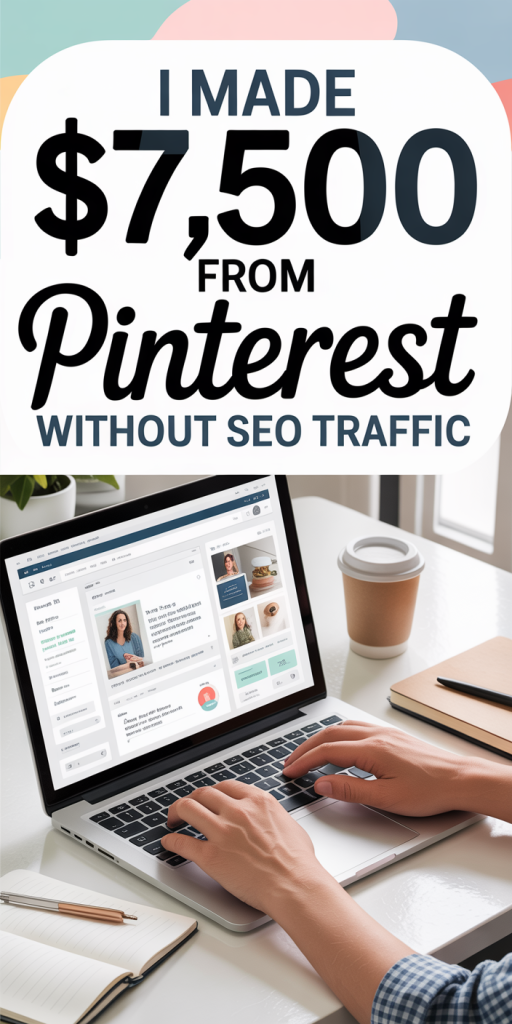
Making $7,500 from Pinterest without relying on SEO traffic was not a stroke of luck: it was a result of strategic planning, consistent effort, and engagement with our target audience. By understanding the platform, creating compelling content, collaborating with others, utilizing email marketing, and consistently analyzing our performance, we were able to turn Pinterest into a lucrative income stream.
For anyone looking to unlock Pinterest’s potential, the strategies we shared can serve as a guide to navigate this visually-driven platform. The journey may require patience and optimization, but the rewards of persistence can be substantial.